SwagerBuilds LLC · 4510 E 168 N, Rigby, ID 83442 · (208) 520-0636

Blog

  • Victor, Idaho Custom Home Builder Guide (2026): Owner Q&A

    Victor, Idaho Custom Home Builder Guide (2026): Owner Q&A

    If you’re looking for a custom home builder in Victor, Idaho, you’re already in the rarefied air. Victor isn’t where most Teton Valley searches start — most start in Driggs. By the time you’re searching specifically for a Victor builder, you’ve usually got a lot in mind, a budget that’s serious, and a build window you need to plan around.

    I’m Bryce Swager, owner of SwagerBuilds. We build $1M-$5M custom homes across Teton Valley including Victor, with our shop based in Rigby. Here’s the unfiltered take on building custom in Victor.

    Why Victor is its own market within Teton Valley

    Victor sits 8 miles south of Driggs, tucked closer to the Big Hole Mountains, with a much shorter drive over Teton Pass to Jackson Hole. That changes the buyer profile materially:

    • More remote workers and commuters who want Idaho property tax with Jackson Hole proximity.
    • More second-home owners who chose Victor specifically for pass access.
    • Lots without finished infrastructure are common — many parcels lack water, septic, or power at the lot line.
    • Pass closures matter — winter Teton Pass closures affect material delivery, sub schedules, and your own commute.

    What it costs to build a custom home in Victor

    Per-square-foot pricing in Victor tracks closely with Driggs:

    • $450-$650 per square foot for a true SwagerBuilds custom home in Victor with stamped engineering, JobTread tracking, daily logs, and custom millwork.
    • $650-$800+ per square foot for high-end builds with complex site work, premium materials, or non-standard architectural specs.

    Watch out: Victor lots without infrastructure can add $50K-$200K+ to total project cost depending on water/septic/power scope. We bid that work transparently before signing the construction contract — not after framing reveals what you’re really paying.

    For a side-by-side cost comparison vs. Jackson Hole, see Building Custom in Jackson Hole vs Teton Valley: The Real Cost Difference.

    Build timeline in Victor: same as Driggs, with one twist

    14 to 22 months total. Stage breakdown is identical to a Driggs build. The Victor twist: Teton Pass closures during winter and major snowstorms can stall material delivery for days at a time. Procurement schedules in JobTread account for this, and we order long-lead items the day the contract signs to absorb pass-related delays.

    Choosing a Victor lot: what most buyers miss

    I scope every Victor lot against five things before I’ll quote a build:

    1. Water source. Public water, well, or shared system? Each has different cost implications and well permitting can add 6-12 weeks.
    2. Septic feasibility. Soils on Victor lots range from sandy loam to glacial till. A geotech and septic perc test before contract is non-negotiable.
    3. Power to lot line. Lower Valley Energy connection costs and timelines vary wildly. Some lots are $5K to connect; others are $40K+.
    4. Pass-access reality. If you’re commuting to Jackson, evaluate the actual drive year-round, not just the August version your realtor showed you.
    5. Snow drift patterns. Where the wind carries snow on your lot affects driveway placement, garage orientation, and roof design. Most architects don’t ask. We do.

    If you’re still lot-shopping between Victor and Driggs, this article will help: Should You Buy a Lot in Driggs or Victor in 2026?

    How to evaluate a Victor custom home builder

    Same five questions I’d ask in Driggs, with two Victor-specific add-ons:

    • Have you built in Victor before? Lot infrastructure, sub-availability, and build-season compression all benefit from local muscle memory. Asking “where are your three most recent Victor builds?” filters out builders who treat Victor as an afterthought.
    • How do you handle pass-related material delays? Real answer: “We order long-lead items the day the contract signs and we have a sub bench that doesn’t fall apart when the pass closes.” Vague answer: “We deal with it as it comes.”

    Why SwagerBuilds for a Victor custom home

    • 5.0★ on Google with all 5-star reviews. BuildZoom 94. Zero complaints on file.
    • Active in Victor and across Teton Valley since 2016 — we know the inspectors, the trades, and the soils.
    • Daily JobTread logs and 24/7 cameras built specifically for out-of-state owners.
    • Stamped structural engineering on every build, including snow load.
    • Written change orders before any work proceeds. Fixed-price contracts.
    • Direct phone access to me — not a rotating cast of project managers.

    I take a small number of Victor builds per year. If you’ve got a lot identified or under contract and you want a real read on what it’ll take to build there, book a planning call →.

    More on Victor & Teton Valley: SwagerBuilds in Victor · Teton Valley overview · Our 6-stage process · How to Build in Teton County

  • Custom Home Builder in Driggs, Idaho: The 2026 Owner’s Guide

    Custom Home Builder in Driggs, Idaho: The 2026 Owner’s Guide

    If you’re searching for a custom home builder in Driggs, Idaho, you’re either about to spend $1M to $5M with someone, or you’re trying to figure out who to even talk to. This guide is the unfiltered answer I wish someone had handed me when I was on the buyer side of my own first build.

    I’m Bryce Swager. I own and operate SwagerBuilds, a custom home builder serving Driggs, Victor, Tetonia, Rigby, and across into Jackson Hole. I’ve been self-employed in construction since 2016, and most of my pipeline lives in Driggs.

    Here’s what every owner asking “who’s the best custom home builder in Driggs?” actually needs to understand before signing a contract.

    What makes Driggs different than building anywhere else

    Driggs sits at 6,200 feet on the Idaho side of the Tetons, in Teton County (ID). Three things make building here harder than building down on the Snake River Plain:

    • Snow load. Real snow load. Roofs and foundations need to be engineered for the actual loads our valley sees — not generic IRC stamps from a warmer climate. Every SwagerBuilds project gets stamped structural drawings sized for Teton Valley conditions specifically.
    • Frost depth and freeze-thaw. Footings have to go below frost (typically 4 feet here, deeper in some sites). Driveways and exterior concrete have to be specified for freeze-thaw cycles or they spall in 3 years.
    • Build season compression. The practical window to get framing and dry-in done before winter is shorter than most builders new to the valley plan for. Missing dry-in by the first hard freeze costs 4-8 weeks easily.

    How much does a custom home cost in Driggs?

    Here’s the honest 2026 range from a working Driggs builder:

    • $400-$500 per square foot — builder-grade custom with quality finishes, simpler architecture, standard lot conditions. Real, but not what most luxury Driggs buyers are picturing when they say “custom.”
    • $500-$650 per square foot — the sweet spot for a true SwagerBuilds custom home. Architect-led design, custom millwork, stamped engineering, real finish carpentry, JobTread tracking, daily logs.
    • $650-$800+ per square foot — high-end custom with significant architectural complexity, premium stone and millwork, complex site work, or unique structural challenges. Common for larger Mt. Moran Rd or river-frontage builds.

    Total project cost for most Driggs custom homes lands between $1M and $5M. If you’re shopping under $1M for a custom home in this market, you’re not actually shopping for a custom home — you’re shopping for a stock plan with finish upgrades. That’s a different scope, and there are good builders who run that range. I’m not one of them, and I’ll tell you that on the planning call rather than dragging you through six meetings.

    For a deeper breakdown by line item, see What It Actually Costs to Build a Luxury Custom Home in Teton Valley in 2026.

    How long does it take to build a custom home in Driggs?

    14 to 22 months from contract signing to keys-in-hand. The honest stage breakdown:

    • Design & pre-construction: 4-6 months
    • Permitting (Teton County ID): 2-4 months
    • Site work and foundation: 1-2 months
    • Framing and dry-in: 2-3 months (race against winter)
    • Mechanical, drywall, and prep: 2-3 months
    • Finish, trim, and punch: 3-4 months

    Anyone telling you they can do a real custom home in Driggs in 9 months is either lying, building a stock plan, or planning to skip discipline you’ll pay for later. The full timeline breakdown is here: How Long Does It Really Take to Build a Custom Home in Teton Valley?

    Permitting in Teton County (ID): what to expect

    Teton County (ID) permitting moves at its own pace. Complete submittal packages move fastest. Plan corrections, missing documents, and incomplete site plans add weeks per round.

    If you’re an out-of-state owner, this is the part that frustrates buyers most. SwagerBuilds handles the entire submittal, corrections, fees, and inspections directly. You don’t need to call the building department from another time zone. We file complete packages and we know which inspectors prefer what.

    How to evaluate a custom home builder in Driggs

    Most buyers ask three or four good questions and 26 bad ones. Here are the questions that actually predict whether a builder will run your project well:

    1. Show me your project management software. If they say “we use email and a notebook,” walk away. Real custom builders run on something — JobTread, Buildertrend, CoConstruct, or similar. SwagerBuilds runs on JobTread. JobTread published a case study on why we switched.
    2. Walk me through a real change order. The honest answer involves “written, priced, signed before any work proceeds.” If they describe verbal change orders or “we’ll true it up at the end,” they’re going to surprise you with a $30K invoice in month 8.
    3. What’s your daily communication look like with owners? “I’ll call you when there’s a problem” is the wrong answer. The right answer is “daily photo logs, on-site cameras, and a real-time dashboard you can check from your phone.”
    4. Can I read your last 5 client reviews — the real ones, on Google? SwagerBuilds is at 5.0★ with 7 published reviews. Other builders may have 50 reviews and a 4.2 average. Read the 1- and 2-star reviews specifically.
    5. What’s your BuildZoom score and Idaho complaint history? Public records. SwagerBuilds is BuildZoom 94, zero complaints on file.

    The full version of this list is here: 10 Questions to Ask Before Hiring a Teton Valley Custom Home Builder.

    What does a SwagerBuilds Driggs project actually include?

    • Lot feasibility, siting, and view-corridor analysis specific to your Driggs parcel
    • Architect coordination from concept through stamped drawings
    • Stamped structural engineering sized for Teton Valley snow load
    • Full Teton County (ID) permit submittal and corrections
    • Site work, foundation, framing, dry-in, mechanical, finish
    • Custom millwork milled in our Rigby shop and installed on-site
    • Daily JobTread photo logs and 24/7 on-site cameras
    • Written change orders before any work proceeds
    • Fixed-price contract once design is locked
    • One-year SwagerBuilds workmanship warranty on top of standard Idaho coverage
    • Direct phone access to me — not a project manager, not a sales rep

    When should you start the planning conversation?

    If you want to be in your Driggs home by next summer, the design contract needed to be signed by March 15 of this year. If you want to be in 18 months out, start design now. If your target is 24+ months out, you have the luxury of a deliberate procurement schedule and a properly sequenced winter dry-in.

    I take a small number of Driggs custom home projects per year. Book a 30-minute planning call → if you want an honest read on whether SwagerBuilds is the right builder for your project, your lot, and your timeline.

    More on building in this market: SwagerBuilds in Driggs · Our 6-stage process · Real client reviews · Why Most Custom Builds Go Over Budget

  • Why Most Custom Builds Go Over Budget (And How Real Systems Stop It)

    Why Most Custom Builds Go Over Budget (And How Real Systems Stop It)

    Twenty years watching custom home builds quietly bleed 20–40% over their contract number is the reason SwagerBuilds runs the way it does. Fourth-generation Rigby builder — I’ve seen every way a job silently leaks money in this valley, and I built the entire SwagerBuilds operating system around the systems most builders won’t run. That’s why every SwagerBuilds project today runs on JobTread, written change orders before work moves, and a real fixed-price contract.

    If you’ve heard custom home horror stories — 30%, 40%, 50% over budget — here’s where the money actually disappears, and what builders who don’t bleed your equity do differently.

    The five places budget vanishes

    1. Verbal change orders

    “Hey, can we move that wall four feet?” “Sure, no problem.” Three weeks later the change shows up on the invoice for $14,800 and the owner is furious. The fix is simple and most builders don’t run it: no work moves until the change order is written, priced, and signed. SwagerBuilds will not pour, frame, or trim against a verbal change. Every PO references a signed change order or it doesn’t get released.

    2. Allowance shortfalls

    “Tile allowance: $25,000.” Owner picks $90,000 worth of tile. The overage is on the owner — but most builders don’t surface it until the bill comes in. JobTread tracks allowance burn in real time. Pick the $90K tile and the system flags it the same day. You decide: spend it, or pick something else. Either way, no surprise.

    3. Underestimated site work

    The lot looked fine. Then we hit lava rock at four feet, and the foundation budget went up $42,000. The fix: real geotech reports before the contract is priced. Most builders skip the geotech to save the owner $4,000. The other 96% of the time they pay $40,000 to find out. Math math.

    4. Procurement delays that turn into expedite fees

    “The cabinets are eight weeks out.” Owner needed them in four. Now there’s a $7,200 expedite fee, or a four-week schedule slip that costs more in carrying costs than the expedite would have. SwagerBuilds orders long-lead items the day the contract signs. Cabinets, windows, custom doors, tile that ships from Italy — all on the procurement schedule before framing breaks ground.

    5. Sub markup creep

    The sub bids the job at $X. Three weeks later submits a “supplemental” for $0.3X. Then another. Every SwagerBuilds sub has a written scope and a fixed bid before they touch the project. Supplementals require my approval and a written change order. Most builders fold and pass it through. I don’t.

    What “fixed-price” actually means

    Fixed-price means the number we agree on is the number you pay — for the scope we agreed on. If you pick $90K tile against a $25K allowance, that’s an allowance overage you signed off on, not a fixed-price violation. If your soil hides a granite shelf at four feet, that’s a written change order with a stamped engineer’s quote, not a “trust me, this’ll be fine.”

    The trick isn’t avoiding overages. The trick is making sure the only overages that hit your invoice are ones you saw, priced, and signed before they happened. Our process is built around exactly that.

    The owner’s job

    • Lock selections before framing. Every undecided finish is a future change order.
    • Read every change order before signing. Yes, all of them. They’re short on a SwagerBuilds project.
    • Don’t say “while we’re at it…” Or — say it, with full awareness that it’s a written change order at written-change-order pricing.
    • Watch your allowance burn rate. JobTread shows it. Most owners don’t look.

    You can build a $2M custom home and land within 1–2% of the contract number. I do it. Book a planning call → if you want to know how the math works on your specific scope.

    More on this: About SwagerBuilds · Read real reviews · JobTread case study

  • How Long Does It Really Take to Build a Custom Home in Teton Valley?

    How Long Does It Really Take to Build a Custom Home in Teton Valley?

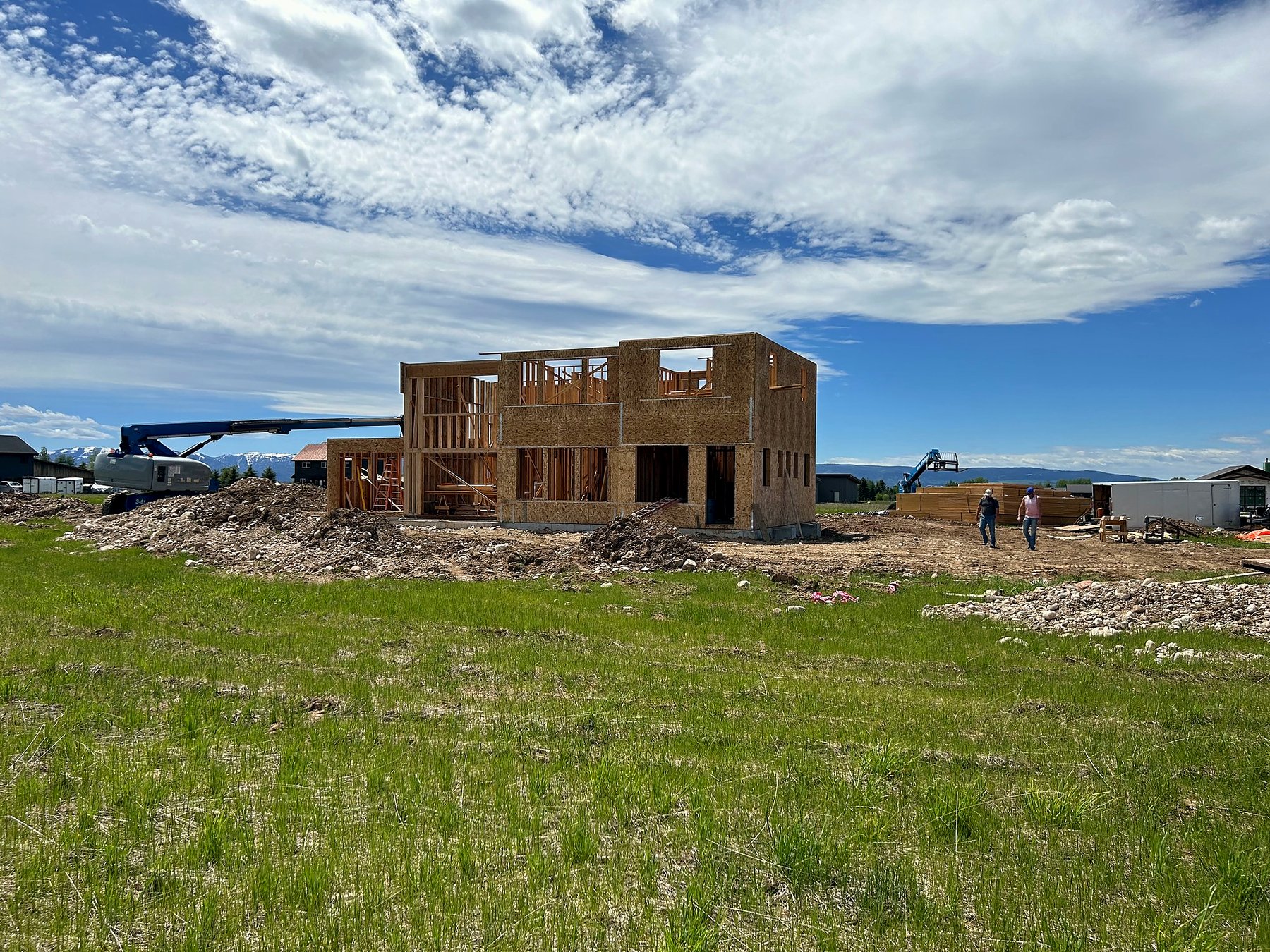
    The honest answer most builders won’t give you: a true luxury custom home in Teton Valley takes 14–22 months from the day you sign the contract to the day you move in. Not 12. Not 9. Not “by next summer if you sign by March.” Fourteen to twenty-two months.

    I’ll show you exactly where the time goes, what compresses it, what blows it up, and what owners can actually do to keep their build on schedule.

    The honest timeline, stage by stage

    • Design & Pre-Construction — 4 to 6 months. Architect coordination, structural engineering, selections, fixed-price contract.
    • Permitting — 2 to 4 months. Teton County (ID) moves at its own pace. A complete submittal package gets through fastest. Plan corrections add weeks.
    • Site work & Foundation — 1 to 2 months. Excavation, footings, foundation pour, backfill. Snow load and frost depth dictate sequencing.
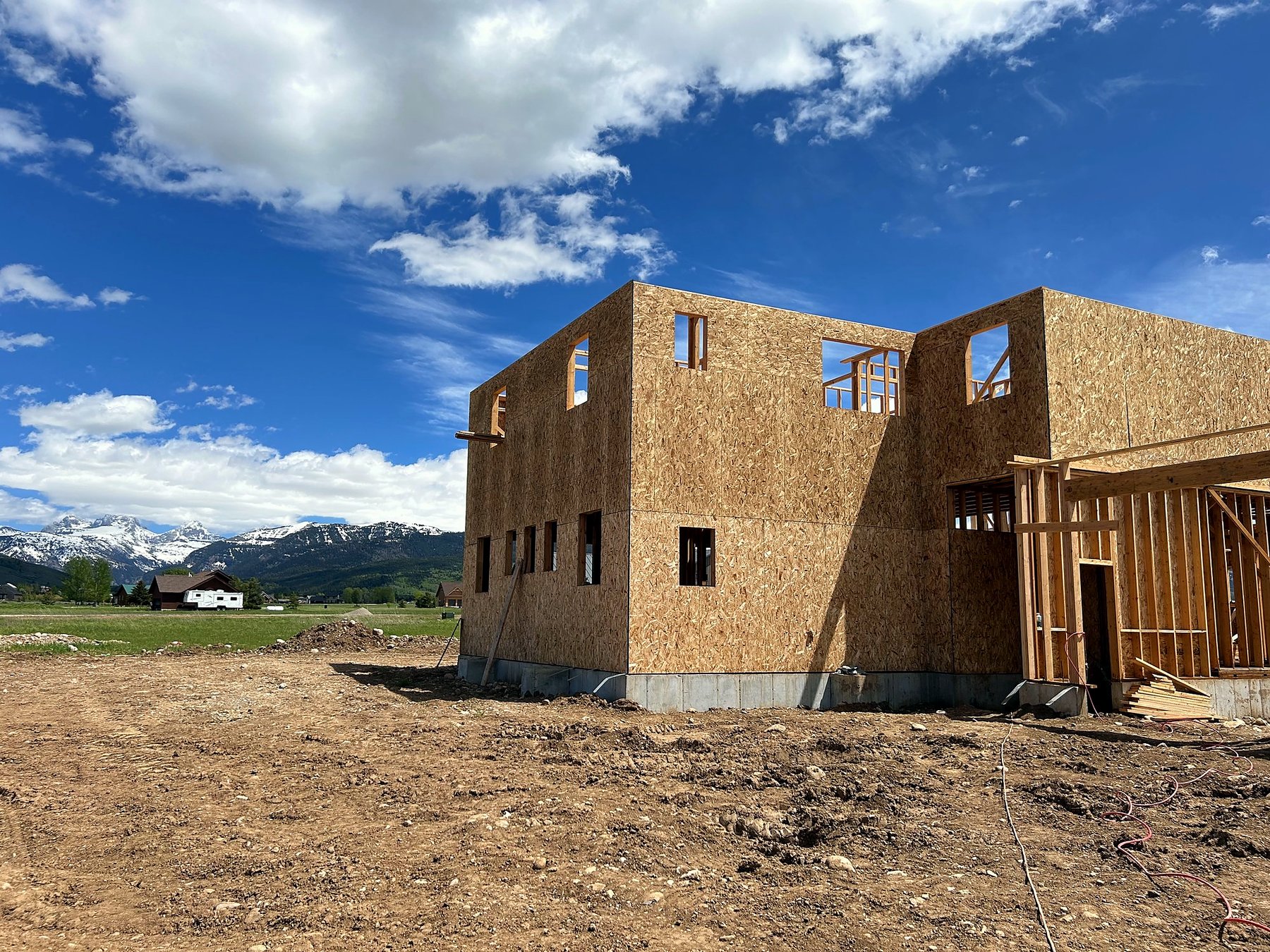
    • Framing & Dry-In — 2 to 3 months. Frame raised, sheathing, roof, windows, weatherproofing. The race against winter.
    • Mechanical & Rough-In — 1 to 2 months. Plumbing, electrical, HVAC, low-voltage. Inspections at every stage.
    • Insulation, Drywall & Paint — 1 to 2 months. Sealing the envelope and prepping for finish.
    • Finish & Punch — 3 to 4 months. Trim, tile, custom millwork, cabinetry, stone, fixtures, paint touch-up. Where time disappears if discipline does.

    That’s 14–23 months on paper. Real-world add: 1–2 months for change orders, weather delays, and material lead times that snuck through procurement.

    What compresses the timeline

    • Locking selections before framing. Every “we’ll figure that out later” item adds 2–4 weeks somewhere downstream.
    • Filing a complete permit package. Plan corrections kill 4–8 weeks per round. We file complete packages.
    • Procurement built into JobTread. Long-lead items (windows, tile, custom doors) ordered the day the contract is signed, not the day the drywall goes in.
    • Owner decisions inside 48 hours. Owners who answer change-order requests within two business days save weeks. Owners who don’t, don’t.
    • Working through winter on dry-in. Once the building is sealed, finish work runs all winter. The penalty for missing dry-in before the first hard freeze is usually 4–8 weeks.

    What blows up the timeline

    • Teton Pass closures stalling material delivery to Jackson-side projects.
    • Soil surprises that didn’t show up in the geotech report (rare with a real geotech report — common without one).
    • Owner scope creep mid-build. Every “while we’re at it…” adds days.
    • Sub no-shows during peak season. Real GCs have backup subs lined up. Most don’t.
    • Underspec’d electrical or plumbing that requires rework after rough-in inspection.

    How SwagerBuilds runs the schedule

    Every SwagerBuilds project has a live schedule in JobTread. You see what’s queued for tomorrow, what’s queued for the next 30 days, and where every line item sits against the master schedule. Not a Gantt chart you’d see once and never again — a living dashboard you can check from your phone at 7 AM Tuesday and again at 3 PM Friday.

    That visibility is what separates a build that lands within a 2-week buffer of the projected move-in date from a build that drifts six months without anyone admitting it. Our Process page walks through every stage in detail.

    When to start if you want to be in by a target date

    • Move in by next summer: sign the design contract by March 15 of this year, latest. Earlier is better.
    • Move in 18 months out: start design now. Real custom homes don’t get built faster by skipping design.
    • Move in 24+ months out: ideal. We can run procurement deliberately, pick the right window for site work, and bake in winter dry-in.

    Want a real read on whether your timeline matches your scope? Book a 30-minute planning call →

    Building in Driggs, Victor, or Jackson Hole? Each market has its own timeline quirks — the planning call covers them.

  • Building Custom in Jackson Hole vs Teton Valley: The Real Cost Difference

    Building Custom in Jackson Hole vs Teton Valley: The Real Cost Difference

    Buyers comparing custom build costs across Teton Valley and Jackson Hole almost always ask: “Why does the same square footage cost 30 to 60 percent more in Jackson?” Here is the real answer.

    The numbers in 2026

    A 4,500 sf custom home in Driggs or Victor in 2026 lands $700-$950 per square foot finished. The same home in Jackson Hole runs $1,100-$1,800 per square foot, with luxury Wilson and Teton Village builds breaking $2,000+. A real $3.5M Driggs build is a real $5M Jackson build.

    Where the Jackson premium actually comes from

    1. Permits and impact fees — Teton County WY charges 2-3x what Teton County ID charges. Easy $40K-$80K difference on a $3M build.
    2. Construction labor rates — Jackson trades earn 20-35% more than Driggs/Victor trades. Same crews often, paid more on the WY side.
    3. Material logistics — most materials still ship through Idaho Falls or Billings. The extra 30-90 minutes adds up across 9-12 months of deliveries. $30K-$80K on a typical build.
    4. Design expectations — Jackson buyers expect Western steel windows, full smart-home wiring, Lutron lighting, custom millwork, $200K+ kitchens. Driggs buyers often spec the same look at lower finish tier.
    5. Schedule premiums — Jackson contractors bid higher because their schedules fill faster. Wait time and certainty have cash value.
    6. Land carrying cost — your $4M Jackson lot taxes alone could fund half a Driggs build. Property tax differential is real.

    When the Jackson premium is worth it

    • You need to be in Jackson for work or family — not a 30-minute drive over a pass that closes in winter storms
    • You want Teton Village ski-in / ski-out and the lot dictates the address
    • You are buying the address itself — Jackson trophy real estate appreciates differently than Teton Valley
    • You have specific architect or design relationships that only work on the WY side

    When Teton Valley wins

    • You want the lifestyle without the price tag — same mountain views, same trout streams, same skiing 20 minutes away
    • You are building 3,500+ sf and the cost differential funds a guesthouse, a shop, or a better lot
    • You value the community feel of Driggs Friday Farmers Market over the international airport access
    • You want privacy that the Jackson side cannot deliver at any reasonable price

    The hybrid play more buyers are doing

    Build the primary residence in Teton Valley at the better cost basis. Buy the small Jackson condo for ski weeks and Jackson business. Treat them as one portfolio. The math beats the single Jackson custom by $1M-$2M for most buyers — and you get the full Tetons experience without paying for it twice.

    How SwagerBuilds prices both sides

    I build in both Teton Valley and Jackson Hole. Same accountability stack — JobTread, on-site cameras, written change orders before work moves. Plan-or-walk first 30 days regardless of which side of the Pass.

    If you want a real number on a specific lot in either market, book a 30-minute Planning Call. We talk through the lot, the design, the budget, the timeline. The call ends in a yes-or-no.