
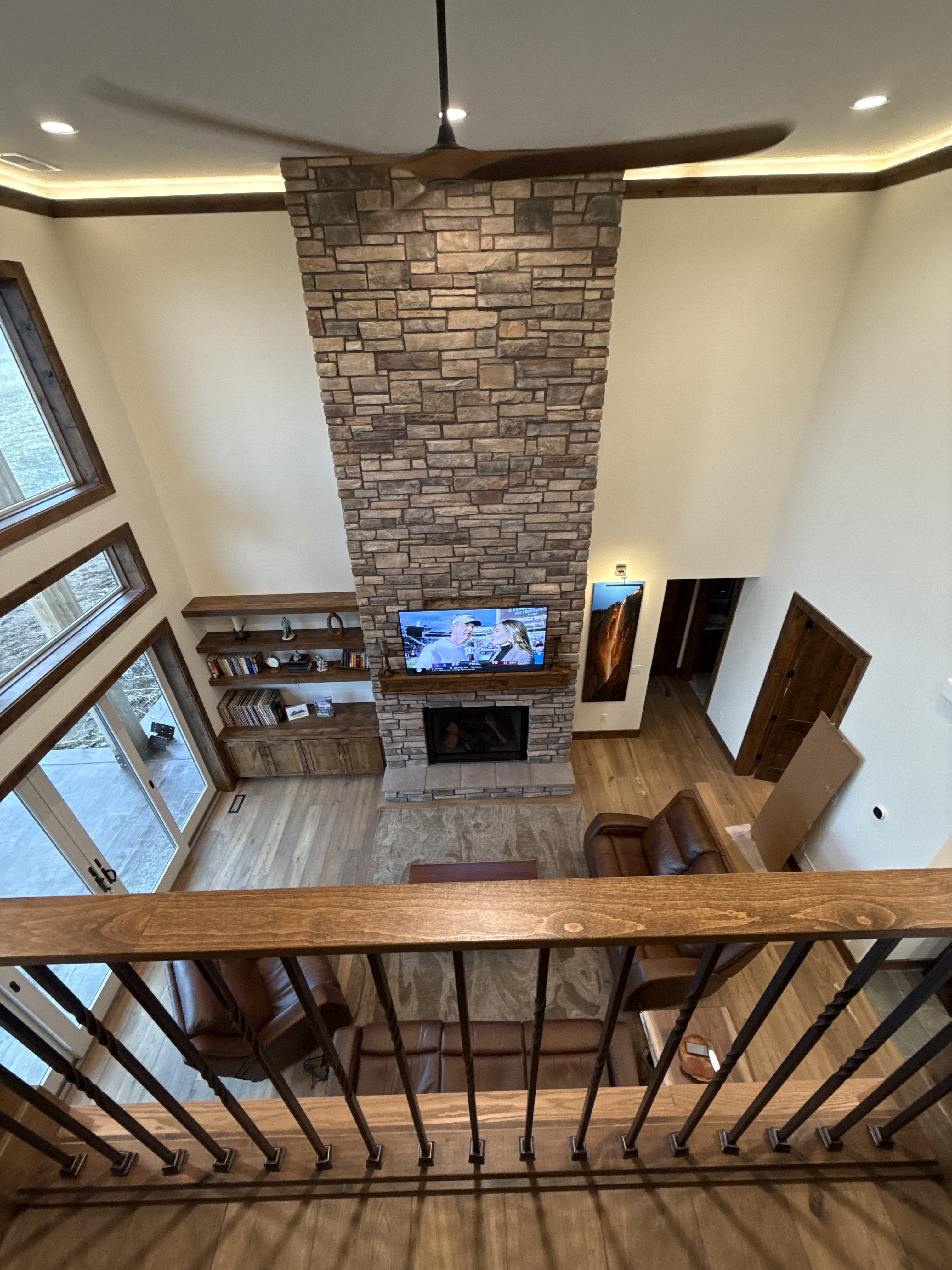
Picking your builder is the most important decision you’ll make on the entire project. Bigger than the lot. Bigger than the floor plan. People obsess over square footage and roof lines, and then hand the whole thing to whoever came in lowest. That’s backwards. The floor plan is just lines on paper until somebody builds it, and the person who builds it decides whether your price holds, whether your schedule is real, and whether you actually like your house when it’s done. Choosing the right custom home builder in Eastern Idaho is the move that protects every dollar and every month you’re about to put into this. Get it wrong and you’re looking at surprise change orders, stalled crews, and a year of fighting. Get it right and you get a number that doesn’t move, a schedule you can trust, and the ability to watch your job every single day.
I’m Bryce Swager, owner and lead builder at SwagerBuilds. We’ve built custom homes across Eastern Idaho since 2016, in Rigby, Idaho Falls, Rexburg, and out into Teton Valley. This is the exact process I’d hand my own family if they were about to interview builders. No fluff, no sales spin, just the questions that matter and the warning signs that should end the conversation.
Fixed-price vs. cost-plus: this is the contract question that matters most
Before anything else, understand how you’re going to pay, because the contract structure decides who carries the risk. There are two basic models, and they are not close to equal.
Fixed price means we lock your total once the design is 80 to 90 percent done and your big selections are made. From that point the number only moves if you change something, and every change gets priced one at a time, in writing, before any work happens. If lumber spikes mid-build, that’s on me, not you. The builder eats the overruns. That’s the whole point.
Cost-plus is the opposite. You pay the actual cost of everything plus a markup, usually 10 to 20 percent. Sounds transparent until you realize the math: the more it costs, the more the builder makes. There is zero built-in reason to hold the line on price, and the overrun risk sits entirely on you, the owner. I run fixed price because I’d rather be on the hook for the number I gave you. If a builder will only do cost-plus on a first build, ask hard why, and understand exactly what you’re signing up for. For a deeper look at where the real money goes on an Idaho build, read my breakdown on the cost reality of building here.
How to vet a custom home builder in Eastern Idaho
Run a real process and don’t shortcut it. Give yourself 30 to 60 days. Here’s the checklist I’d use:
- License. Idaho requires a registered contractor license to operate. Ours is RCE-57499, and you can verify it yourself on the Idaho DOPL site. If a builder won’t put their number on the website, that tells you something.
- Insurance. Ask for proof of general liability and workers’ comp, and ask for the certificates in writing. An uninsured crew on your lot is your liability.
- Reviews and reputation. Check Google reviews, BuildZoom, and the BBB. Read the one and two star reviews specifically. You’re looking for patterns, not perfection. How a builder handled a problem tells you more than a wall of five-star ratings.
- References. Ask to walk three to five finished homes close to your size and budget, and ask to talk to those owners directly. A builder with nothing to hide hands these over fast.
- Lien history. Mechanic’s liens against past projects are a giant flag. It usually means the builder didn’t pay subs or suppliers, and an unpaid sub can lien your property even after you paid the builder. Ask, and verify with the county recorder.
Communication and systems: can you actually see your job?
This is where a lot of builds go sideways, and almost nobody asks about it up front. You’re going to be away from the site most of the time. You need a real window into the work, not a text back three days later. Ask exactly how you’ll see progress.
We run every job through JobTread. You get your own login. You see the live schedule, every selection and its cost, every change order, and a daily photo log of what happened on site. No guessing, no “trust me, it’s moving.” If a builder’s answer to “how do I track this” is a shrug or a promise of weekly emails, that’s a process problem that will cost you later. Good systems aren’t a nice-to-have on a million-dollar build. They’re the difference between a project you can manage and one that manages you.
The questions to ask before you sign
- How many custom homes have you built in the last five years, and how many right here in Eastern Idaho, Teton Valley, or Jackson Hole?
- Are your contracts fixed price or cost-plus? Who carries the overrun risk?
- What’s in the base price versus an allowance? Padded allowances hide the real number.
- Do you have a designer in house, an architect you work with, or do I bring my own?
- How do you handle change orders, a set markup, or a fresh negotiation every time?
- What’s your warranty on the workmanship, and on the structure?
- Can I see a live job in progress and tour your last three finished homes?
- On those last three, what were they contracted at, and what did they actually finish at?
That last one is the tell. Any builder can quote a low number. The honest ones can show you that their final price landed where they said it would. If you want help framing the whole conversation, my full builder’s blog walks through the process step by step.
Green flags vs. red flags
| Green flag (trustworthy builder) | Red flag (walk away) |
|---|---|
| License number posted publicly and verifiable on DOPL | No license number anywhere, or “I’ll get it to you” |
| Fixed-price contract that locks once design is final | Cost-plus pushed on a first-time builder with no explanation |
| Everything in writing: price, allowances, change orders | Verbal quotes and handshake pricing |
| Real selections behind every allowance | Vague allowances with no products chosen |
| Finished homes you can tour and owners you can call | No references and no homes to walk |
| Daily photo logs and live schedule access (JobTread) | “I’ll text you updates when I can” |
| Local crews and local subs who know the county | Crews trucked in from Boise or Salt Lake |
| Clean lien and payment history with subs and suppliers | Mechanic’s liens on past projects |
| Clear written warranty on workmanship and structure | No warranty, or a warranty nobody will put on paper |
| Patient: won’t let you sign before plans are about 80% done | Pressure to sign fast, before the math is real |
Red flags that should end the conversation
Some of these are dealbreakers on their own. No license number on the website and you have to ask why they’re hiding it. All-verbal pricing means there’s nothing to hold them to. Pressure to sign before the plans are 80 percent done means nobody’s done the real math yet, and your “fixed price” is a guess that’s going to grow. Padded allowances with no real selections behind them are designed to make the quote look cheap so you blow past them later. No finished homes to tour is the simplest tell there is. And crews trucked in from out of state add a 25 to 40 percent labor premium, plus nobody’s really watching your job day to day. Any one of these is reason enough to keep interviewing.
Why local matters more than you’d think
A builder who actually lives in your market brings things an out-of-town crew can’t fake. The best local subs already work with us, so we get their good work and their priority on the schedule. We know how the counties differ, because Bonneville, Jefferson, Madison, and Teton all run their own way on permitting and inspections. We know how to sequence a build through an Idaho winter so the schedule doesn’t fall apart in February. And there’s real accountability when your builder is going to run into you at Broulim’s. If you’re building closer to the foothills, the same logic applies to a custom home builder in Idaho Falls or out east to a Teton Valley custom home builder. Local shows up in your budget and in your finish quality both.
Frequently asked questions
How do I choose a custom home builder in Eastern Idaho?
Run a real process and don’t rush it. Verify the license and insurance, walk three to five finished homes close to your scope, confirm the contract is fixed price, ask how you’ll see the job day to day, call past clients, check for liens, read the warranty, and confirm the builder lives and works here. Give yourself 30 to 60 days to vet properly.
Is fixed-price or cost-plus better for the homeowner?
Fixed price, almost every time. It locks your total once the design is done and puts the risk of material and labor overruns on the builder. Cost-plus puts that risk on you and gives the builder a financial reason to let costs climb. On a first build especially, fixed price is the safer structure.
What’s the biggest red flag when hiring a builder?
Pressure to sign before the plans are roughly 80 percent done. If nobody has finished the real math, your “price” is a guess that will grow through change orders. Close behind it: no license number, all-verbal pricing, and mechanic’s liens on past jobs.
Does my builder really need to be local?
Yes. A local builder brings established sub-trade relationships, county-specific code knowledge, winter build experience, and genuine accountability. Crews trucked in from Boise or Salt Lake add a 25 to 40 percent labor premium and leave real supervision gaps on your site.
Ready to interview a builder who’ll show you everything?
We’re a fixed-price, JobTread-transparent custom home builder serving Rigby, Idaho Falls, Rexburg, Driggs, Victor, and Tetonia. Licensed Idaho registered contractor, RCE-57499, with local crews, local subs, daily photo logs, and a structural warranty that runs ten years. Bring your questions. I’ll answer them straight.
Vetting a builder? Read these first.
What separates a real bid from a number on letterhead.
Leave a Reply