
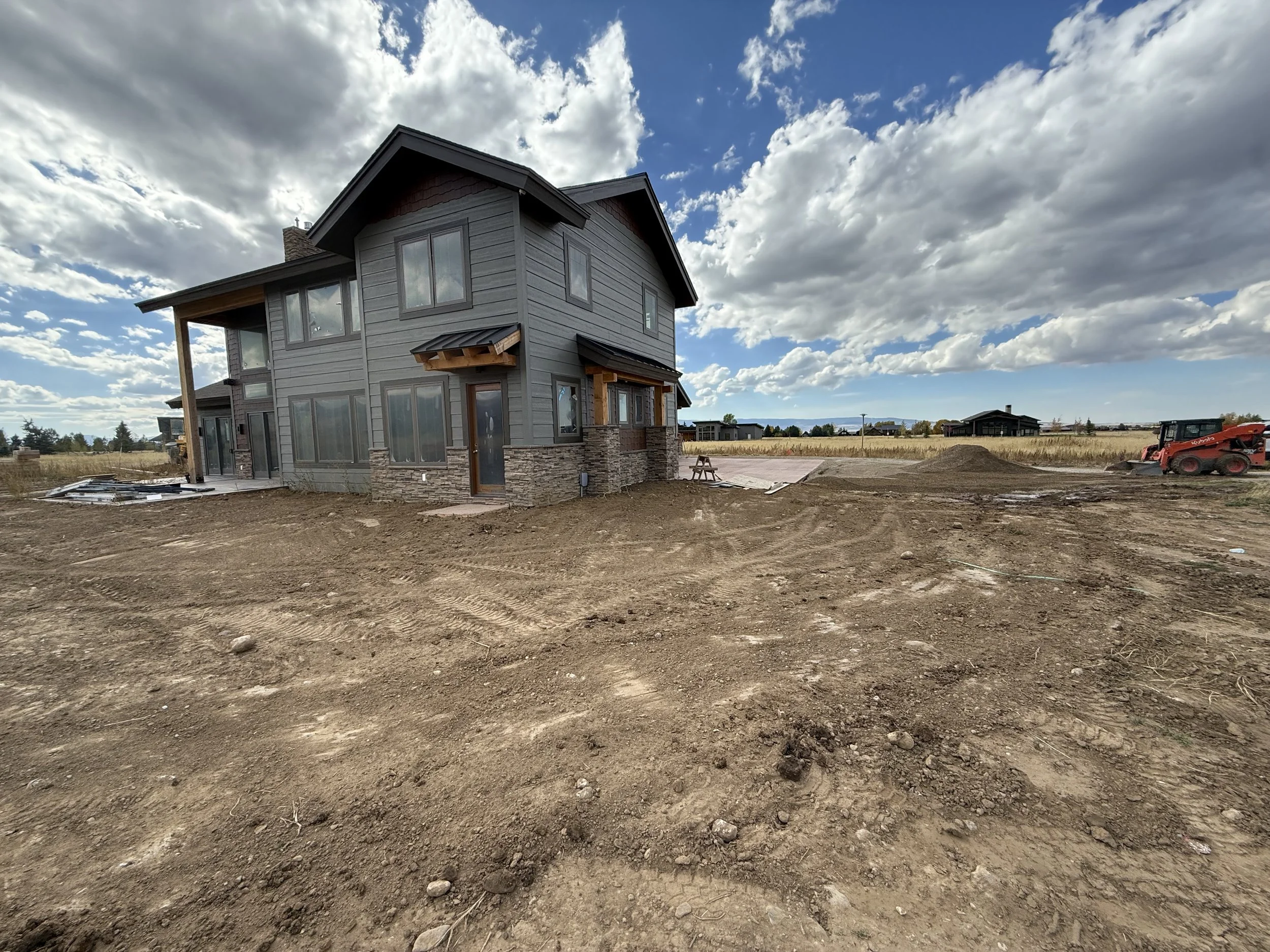
The single most expensive decision in a Driggs custom home build isn’t the kitchen, the millwork, or the roof. It’s the lot. The wrong Driggs lot can add $200K to your foundation budget before you’ve poured a slab. The right one frames the Tetons through your great room and pays you back every morning for the rest of your life.
I’m Bryce Swager. I build custom homes in Driggs through my company, SwagerBuilds. This is my no-marketing-spin field guide to what actually makes a Driggs lot worth building on.
Driggs neighborhoods worth knowing
Mt. Moran Rd / River Rim
Premium-priced ground with the strongest Teton view corridors in Driggs. Most owners building here are pricing $3M+ projects. We built The Arbogast Home on Mt. Moran Rd — see it in our portfolio.
Targhee Hill / Targhee Towne
Closer to Grand Targhee resort. More wooded, often more snow drift. Lots tend to be larger but build-site selection within the lot matters more.
Teton Springs (mostly Victor side, some Driggs proximity)
Subdivided community with HOA, golf, and infrastructure. Different buyer profile and different build experience.
Lower Valley / Driggs town parcels
Closer to schools, the airport, and town amenities. Less dramatic Teton views but easier infrastructure and faster commute everywhere in the valley.
The five questions every Driggs lot has to answer
- What does the geotech actually show? Driggs sites range from sandy loam to glacial till to lava rock. Lava rock at 4 feet adds $30K-$60K to your foundation. Real geotech reports cost $3K-$5K. Skipping them costs 10x that.
- Where does the snow drift? The prevailing winter wind in Driggs comes off the Big Holes. Where it deposits snow on your lot dictates driveway placement, garage door orientation, and whether your front door buries every February. Most architects miss this. We don’t.
- What’s the actual view corridor at the build site? A Teton view from the road doesn’t mean a Teton view from your great room. Stake the building corners, stand inside the imagined space, look at the Tetons. Or hire a builder who’ll do it with you.
- Is power and water at the lot line? Lower Valley Energy (the local co-op) connection costs vary by lot. Some are $5K. Some are $40K+. Get it scoped before you write the offer, not after.
- What’s the drainage doing? Spring runoff in Teton Valley moves a lot of water. A lot that looks fine in August may be sitting in standing water in May. Site visits in shoulder seasons matter.
Lots to be cautious about
- Lots with no septic perc results. If the seller hasn’t perc-tested it and won’t allow it before closing, walk.
- Lots with steep slopes that face north. Add foundation cost, lose solar gain, fight ice on the driveway every winter.
- “Subdivision-ready” lots that aren’t really. Some marketed-as-finished subdivisions still need final road acceptance, water hookups, or other infrastructure before construction can start.
- Lots inside scenic overlay districts you didn’t know existed. Teton County (ID) has overlay reviews on certain ridgelines and view corridors that can add 60+ days to permitting.
How SwagerBuilds evaluates a Driggs lot for clients
Before any custom home contract is signed, we run:
- Site visit with the architect (planned siting, view corridors, sun)
- Geotech engagement and report review
- Septic perc verification
- Power and water connection scope and cost estimate
- Permit-conditions check (overlay districts, setbacks, view-corridor reviews)
- Snow drift and drainage assessment
If the lot can’t handle the home you want to build, we tell you before the contract — not in month four when the foundation cost just went up $80K.
Got a Driggs lot under contract or close to one? Book a 30-minute planning call → and we’ll talk through what it’ll take to build there.
Related: Driggs custom home builder · Building a Custom Home in Driggs — Costs, Timeline, Permitting · Cost to Build in Teton Valley 2026
Leave a Reply