Financing a custom home in Teton Valley in 2026 usually means a construction-to-permanent loan from a regional bank, requiring 20-30 percent down, a fixed-price builder contract, and construction rates 1-2 points above conventional mortgage. A 20-year GC’s job isn’t to be your lender — but here’s what to know before you talk to a bank, and which questions actually matter for a Teton Valley construction loan.
[Photo placeholder: Local Teton Valley bank branch or generic construction loan document]
What Kind of Loan Do You Need for a Custom Home in Teton Valley?
Two options. Construction-to-permanent (C2P) is the standard — one loan closes both construction and permanent mortgage. During construction: interest-only payments on drawn funds. At completion: converts to a standard mortgage. Single closing, single set of fees.
Stand-alone construction loan is the alternative — 12-24 month construction financing that you refinance into a permanent mortgage at completion. Two closings, two sets of fees. Sometimes cheaper on the construction rate but usually more expensive total.
Most Teton Valley clients go C2P. Two local Teton Valley banks and 3-4 regional Idaho/Wyoming banks offer them.
How Much Do You Need to Put Down?
20-30 percent typical. Some lenders count the value of the land you own toward the down payment — if your Driggs lot is worth $250K and the total project is $1.5M, that $250K of equity may count as 17% down against the loan.
Jumbo construction loans (over $766K in 2026) typically require 25-30% down. In-town Teton Valley custom homes almost always trip jumbo thresholds.
What Do Construction Loan Rates Look Like in 2026?
Construction phase interest: 1-2 points above conventional 30-year mortgage rate. In 2026 that puts construction interest in the 8-10% range depending on the lender and credit profile. Permanent conversion rate: whatever conventional is at the conversion date, so you’re betting on the rate environment 12-18 months out.
Some lenders offer rate-lock for the permanent conversion at contract signing. Extra 0.25-0.5 points but removes the biggest financing risk in the project.
How Does the Draw Schedule Work?
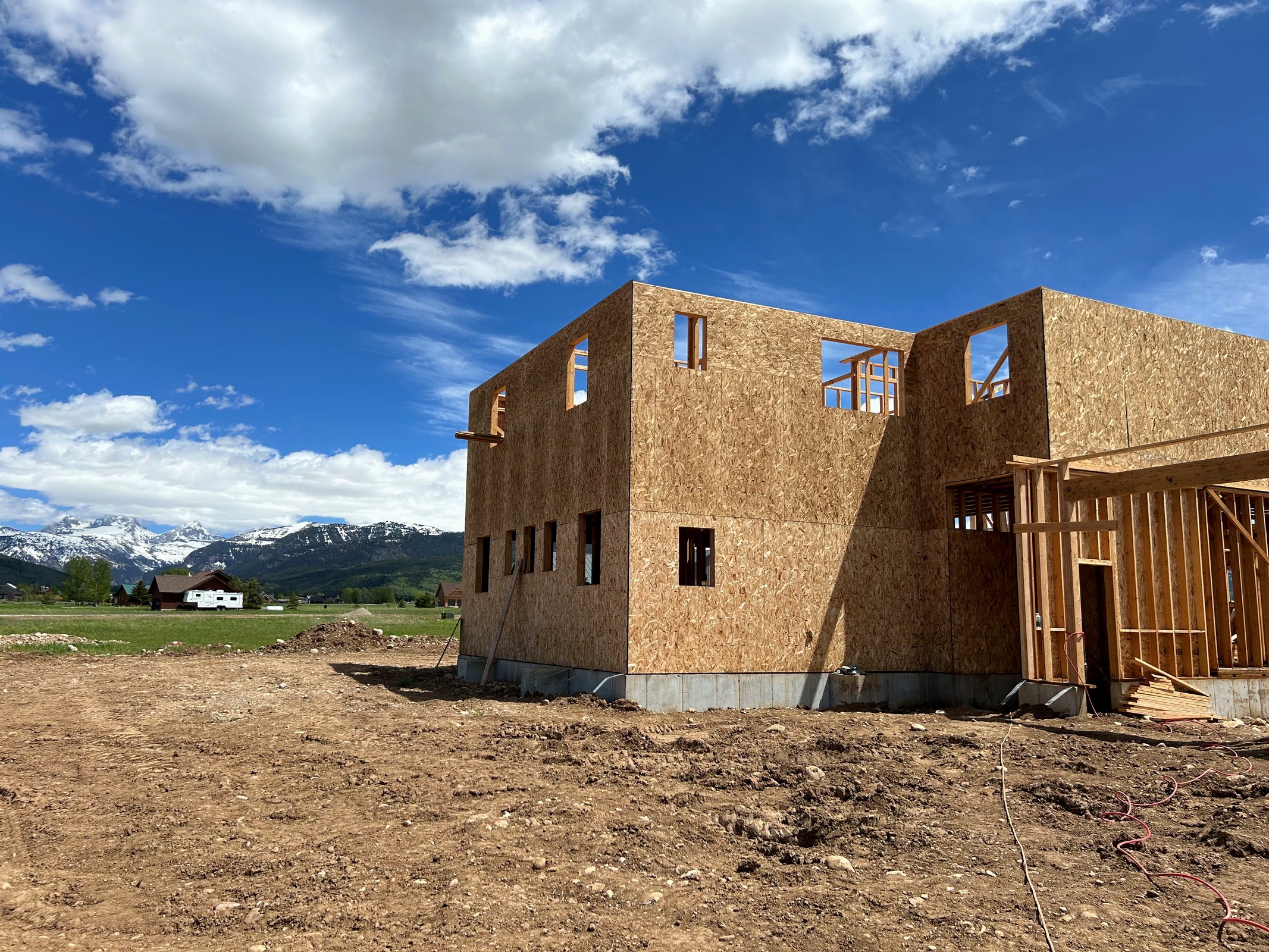
Lender releases construction funds in stages tied to project milestones. Typical Teton Valley draw schedule: 10% at foundation complete, 15% at framing complete, 15% at roof/envelope complete, 15% at rough-ins complete, 15% at drywall complete, 15% at finish carpentry complete, 15% at final inspection.
Each draw requires bank inspection to verify work complete. Turnaround is typically 5-10 business days. A GC who’s done this before knows how to time draw requests to keep subcontractors paid without you carrying float.
Why Do Lenders Prefer Fixed-Price Contracts?
Because the total loan amount is knowable at underwriting. With a cost-plus contract, the lender can only estimate the ceiling — which usually means underwriting to a lower amount than the client actually needs, leaving a funding gap when cost overruns hit.
Fixed-price with SwagerBuilds locks the number. Lender underwrites to that number. No mid-project “we need to increase the loan” conversations. Twenty years watching budgets blow up in this valley means we’ve seen plenty of cost-plus builds run out of loan mid-construction and force clients to bring in personal cash to finish.
What Do Lenders Want From the Builder?
Fixed-price contract with detailed cost breakdown. Proof of insurance (general liability minimum $2M, workers comp). References. A recent project audit showing on-time and on-budget performance. Willingness to work with the draw schedule and inspection process.
SwagerBuilds provides all of that as standard. We’ve worked with every major Teton Valley construction lender.
Which Banks Do Teton Valley Construction Loans?
Local: two Teton Valley community banks with strong construction loan programs — they know the market, the sub base, and the timelines. Regional: 3-4 Idaho/Wyoming regional banks that lend into Teton Valley. National: some national lenders (through mortgage brokers) will do jumbo C2P for Teton Valley, though local lenders usually beat them on rate and flexibility.
We’ll refer you to specific lenders during pre-construction based on your loan size, credit profile, and timeline. No commissions — just relationships from 20 years of Teton Valley construction.
What Should You Do Before Talking to a Lender?
Get a fixed-price builder contract or at minimum a signed pre-construction agreement so the lender knows you have a real project scoped. Have your land under contract or already owned. Have 2 years of tax returns and current pay stubs organized. Know your target total budget — lenders will ask.
How Do I Get Started?
Intake at swagerbuilds.com/start. During pre-construction we can introduce you to lenders, coordinate the fixed-price contract with their underwriting, and structure the draw schedule to fit your cash flow. See whole home remodel hub if you’re renovating instead, or pricing page.
Frequently Asked Questions
What kind of loan do I need for a Teton Valley custom home?
Construction-to-permanent (C2P) is standard — one loan for construction and permanent mortgage.
How much down payment do I need?
20-30% typical. Land equity often counts toward down payment.
What are 2026 construction loan rates?
1-2 points above conventional 30-year, typically 8-10% during construction phase.
Why do lenders prefer fixed-price contracts?
The total loan amount is knowable at underwriting. Cost-plus creates funding gap risk mid-project.
Do you work with local Teton Valley lenders?
Yes. We refer to 2 local Teton Valley banks and 3-4 regional lenders that do construction loans in Driggs and Victor.
Ready to Talk Financing and Building?
20-year Rigby builder. Fixed-price contracts that lenders trust. Start your Teton Valley custom home here.