Author: Bryce Swager

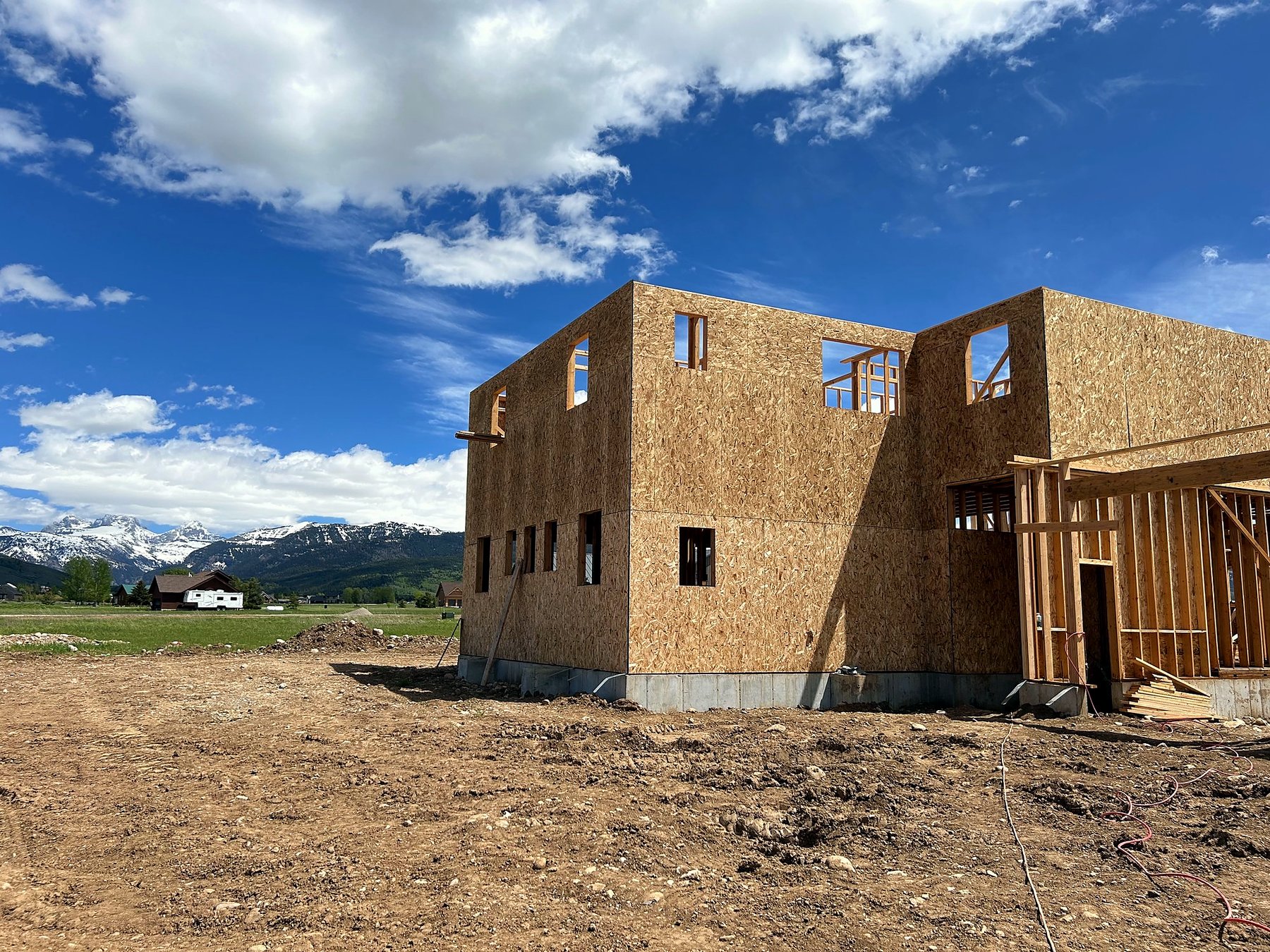
  • Custom home construction in Teton Valley, showcasing framed walls and mountain backdrop, emphasizing luxury building process.

    Building Custom in Jackson Hole vs Teton Valley: The Real Cost Difference

    Buyers comparing custom build costs across Teton Valley and Jackson Hole almost always ask: “Why does the same square footage cost 30 to 60 percent more in Jackson?” Here is the real answer.

    The numbers in 2026

    A 4,500 sf custom home in Driggs or Victor in 2026 lands $700-$950 per square foot finished. The same home in Jackson Hole runs $1,100-$1,800 per square foot, with luxury Wilson and Teton Village builds breaking $2,000+. A real $3.5M Driggs build is a real $5M Jackson build.

    Where the Jackson premium actually comes from

    1. Permits and impact fees — Teton County WY charges 2-3x what Teton County ID charges. Easy $40K-$80K difference on a $3M build.
    2. Construction labor rates — Jackson trades earn 20-35% more than Driggs/Victor trades. Same crews often, paid more on the WY side.
    3. Material logistics — most materials still ship through Idaho Falls or Billings. The extra 30-90 minutes adds up across 9-12 months of deliveries. $30K-$80K on a typical build.
    4. Design expectations — Jackson buyers expect Western steel windows, full smart-home wiring, Lutron lighting, custom millwork, $200K+ kitchens. Driggs buyers often spec the same look at lower finish tier.
    5. Schedule premiums — Jackson contractors bid higher because their schedules fill faster. Wait time and certainty have cash value.
    6. Land carrying cost — your $4M Jackson lot taxes alone could fund half a Driggs build. Property tax differential is real.

    When the Jackson premium is worth it

    • You need to be in Jackson for work or family — not a 30-minute drive over a pass that closes in winter storms
    • You want Teton Village ski-in / ski-out and the lot dictates the address
    • You are buying the address itself — Jackson trophy real estate appreciates differently than Teton Valley
    • You have specific architect or design relationships that only work on the WY side

    When Teton Valley wins

    • You want the lifestyle without the price tag — same mountain views, same trout streams, same skiing 20 minutes away
    • You are building 3,500+ sf and the cost differential funds a guesthouse, a shop, or a better lot
    • You value the community feel of Driggs Friday Farmers Market over the international airport access
    • You want privacy that the Jackson side cannot deliver at any reasonable price

    The hybrid play more buyers are doing

    Build the primary residence in Teton Valley at the better cost basis. Buy the small Jackson condo for ski weeks and Jackson business. Treat them as one portfolio. The math beats the single Jackson custom by $1M-$2M for most buyers — and you get the full Tetons experience without paying for it twice.

    How SwagerBuilds prices both sides

    I build in both Teton Valley and Jackson Hole. Same accountability stack — JobTread, on-site cameras, written change orders before work moves. Plan-or-walk first 30 days regardless of which side of the Pass.

    If you want a real number on a specific lot in either market, book a 30-minute Planning Call. We talk through the lot, the design, the budget, the timeline. The call ends in a yes-or-no.

  • Expansive green lot in Driggs, Idaho, with distant mountains and scattered buildings under a bright blue sky, illustrating potential real estate opportunities for home building.

    Should You Buy a Lot in Driggs or Victor in 2026?

    I get the same question from buyers every week: “We have been looking at lots in Driggs and Victor. Where should we actually buy?” Here is what I tell them.

    The honest answer: it depends on what you want from your build

    Driggs and Victor are 30 minutes apart and feel like different worlds. The right choice depends on lot use, build budget, and what you want when you walk out the door in the morning.

    Driggs in 2026

    The county seat. More walkable downtown — coffee shops, restaurants, the Spud Drive-In, art galleries. Friday Farmers Market. The new Marriott just opened. Median Driggs lot price is creeping toward $400K-$650K for buildable acreage. Building permits are running 4 to 6 weeks. ADU rules are tightening — Driggs caps short-term rentals at 1 per property and is restricting workforce-housing requirements.

    Best for: Buyers who want walkable lifestyle, the social fabric of a downtown, and proximity to the airport (Driggs/Reed Memorial is right in town for private aviation).

    Victor in 2026

    Smaller, quieter, closer to the Pass to Jackson Hole (15-20 minutes vs 35 from Driggs). More rural lots available. Median Victor lot price for buildable acreage runs $350K-$550K with more variability — some 5+ acre parcels still trade in the $700Ks. Building permits run similar 4-6 weeks. Less commercial activity. The Knotty Pine and a few other staples but you drive to Driggs or Jackson for the rest.

    Best for: Buyers who want privacy, larger acreage, faster access to Jackson Hole skiing/dining/airport, and do not need a downtown out their front door.

    What both share

    • Snow load 70+ psf engineering required (90+ at higher elevations)
    • Septic perc test before you close (some lots fail and need engineered systems at $40K-$80K extra)
    • Well drilling at 150-400 feet, $25K-$50K typical
    • Same Teton County impact fees and permitting timeline
    • Same architect ecosystem (most firms work both sides)

    The buyer mistake I see most often

    Out-of-state buyers fall in love with a lot in one of these towns based on a 90-second drone video and a summer weekend visit. Then they discover the south-facing slope they thought was perfect actually catches 3 weeks of ice in November, or the easement on the access road floods every spring, or the well drilling estimate doubles because the geology is harder than the realtor mentioned.

    Before you close on any lot in Teton Valley, run lot due diligence: survey, water rights check, septic perc test, wetlands review, easement research, geotech if your lot has any slope or stream nearby. This costs $3K-$8K. It saves $50K-$200K of surprises.

    If you want my honest take on a specific lot

    Send me the address. I will give you my honest read in 24 hours. No charge. I would rather tell you a lot is wrong before you spend $500K on it than try to build on a problem we both should have caught earlier.

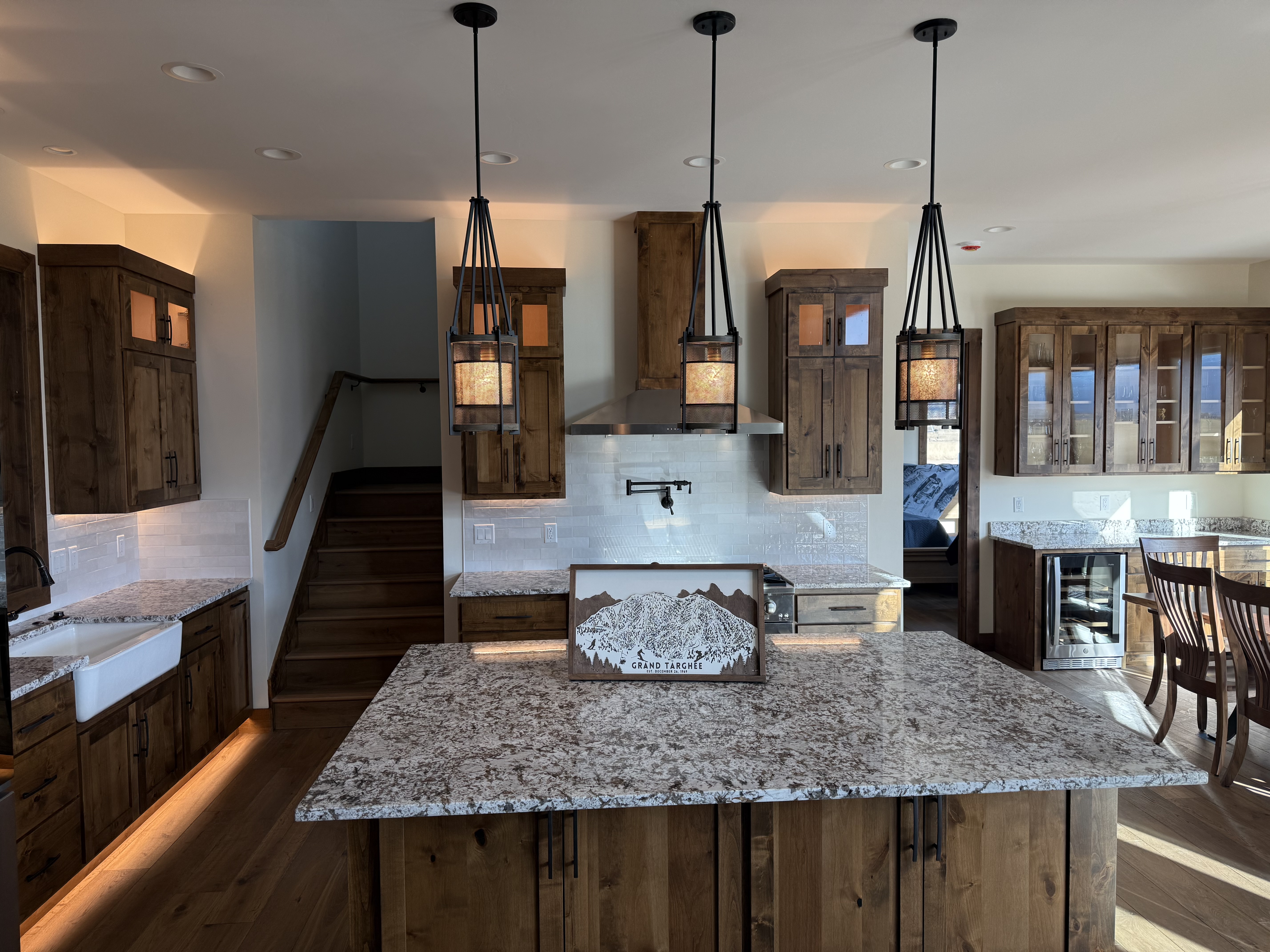
  • Modern kitchen featuring rustic wooden cabinets, granite countertops, stylish pendant lighting, and a scenic mountain view, reflecting luxury custom home design in Teton Valley.

    10 Questions to Ask Before Hiring a Teton Valley Custom Home Builder

    The first question every buyer asks me on a Planning Call: “Bryce, what should I be asking the other builders I’m interviewing?” Here are 10 questions that will tell you in 30 minutes whether someone is the right fit — or about to take you for a six-figure ride.

    1. Show me a sample change order from a recent project.

    If they hesitate, walk. A real builder has anonymized examples ready. Verbal change orders are how $2.5M custom homes turn into $3.4M nightmares.

    2. What is your rule for when work can start on a change order?

    Right answer: “After it is written, priced, and signed by both parties.” Anything else means you are about to find out about cost overruns at the closing walk-through.

    3. How do you track daily progress, and what do I see?

    Real builders use JobTread, BuilderTrend, or Procore. Daily logs, photos, line-item costs visible to the client. “I will text you” is not a system.

    4. Who is my point of contact day to day?

    You want one named project manager who knows your job. Not a rotation. Not “whoever picks up the phone.” A single person with skin in the build.

    5. What is your average response time to a homeowner question?

    Hours, not days. If they cannot answer, the answer is days — and that is your build experience for the next 18 months.

    6. Can you walk me through a recent budget vs actual on a finished project?

    Builders who run jobs cleanly will show you. Builders who do not will deflect. This is the single most diagnostic question you can ask.

    7. What references can I call from clients you finished in the last 18 months?

    Not “we will send some.” Names and numbers, today, in the meeting. Recent finishes only — projects from 5 years ago do not tell you how the company runs now.

    8. What is your insurance coverage and your sub list?

    General liability, workers comp, builder risk. You should be added as additional insured. The sub list tells you whether they hire the same crew or whoever is available.

    9. If my budget cannot carry my design, will you tell me before I sign?

    This is the question most builders will not answer honestly. The right answer is yes. At SwagerBuilds, the first 30 days are plan-or-walk: if the budget cannot carry the vision, you walk with no fees.

    10. Will you put a plan-or-walk window in writing?

    The most expensive decision in a custom build is signing with the wrong builder. The cheapest is walking before you do. Make sure the option is contractually yours.

    How to score the answers

    If a builder hits 8 of 10 of these well, they are worth a second meeting. If they hit fewer than 6, walk. The numbers do not lie.

    If you want to see exactly how SwagerBuilds answers all 10 — book a 30-minute Planning Call. The first call ends in a yes-or-no on the project. No follow-up loops.

  • Custom luxury home exterior with large windows, stone chimney, and wooden accents in Teton Valley, highlighting modern design and craftsmanship.

    What Change Orders Actually Look Like on a Build That Does Not Go Sideways

    Almost every luxury custom home build I have cleaned up after another builder failed for the same reason: change orders nobody wrote down. The client thinks they got an upgrade. The builder thinks the client agreed to the cost. By the time someone pulls a thread, there is $80K–$300K of work that nobody can prove was authorized — and a relationship that is about to end in arbitration.

    Here is what a change order should look like on a build that is run right.

    A change order is a contract amendment

    Not a phone call. Not a text. Not a yeah-that-sounds-great on a jobsite walk. A change order is a written, priced, dated, signed amendment to the original contract. Anything less is a future fight.

    On every SwagerBuilds project, a change order has six things on it:

    1. The exact scope of work changing — what is being added, removed, or upgraded.
    2. The price impact — broken out by labor, materials, and overhead.
    3. The schedule impact — added days, if any, and which trades are affected.
    4. The cost source — the actual quote from the supplier or sub, attached.
    5. The signature line — both client and builder sign.
    6. The date — when it was written and when it is effective.

    If any of those six are missing, it is not a change order. It is a misunderstanding waiting to happen.

    The rule we run by: written and signed before work moves

    On every SwagerBuilds project, no work on a change order moves until it is written and signed. Period. Even if it costs us a day on the schedule. The reason: a job where every change is documented finishes on budget. A job where changes happen verbally finishes 15–30% over. Every time.

    What a typical custom home will see

    On a 4,500 sf custom home in Teton Valley, expect 15–35 written change orders over the life of the build. Some will be small ($500 — different door hardware). Some will be substantial ($75K — different window package). Most will be the client improving the build as they live in it on paper. That is normal. What is not normal is finding out about them at the closing walk-through.

    Three questions to ask any builder before you sign

    1. Show me a sample change order from a real recent project. If they hesitate, walk.
    2. What is your rule for when work can start on a change? Right answer: after it is written, priced, and signed. Anything else, walk.
    3. How are change orders tracked? Right answer: in our project management system, with running totals visible to the client. (We use JobTread.)

    Why this matters more than anything else

    A custom home is the largest single transaction most clients ever make. Change orders are where the trust either holds or breaks. Get the change-order discipline right and the build runs smooth. Get it wrong and the build runs your life.

    If you want to see exactly how SwagerBuilds runs change orders — including a real anonymized example from a recent build — book a 30-minute Planning Call. We will walk you through the system.

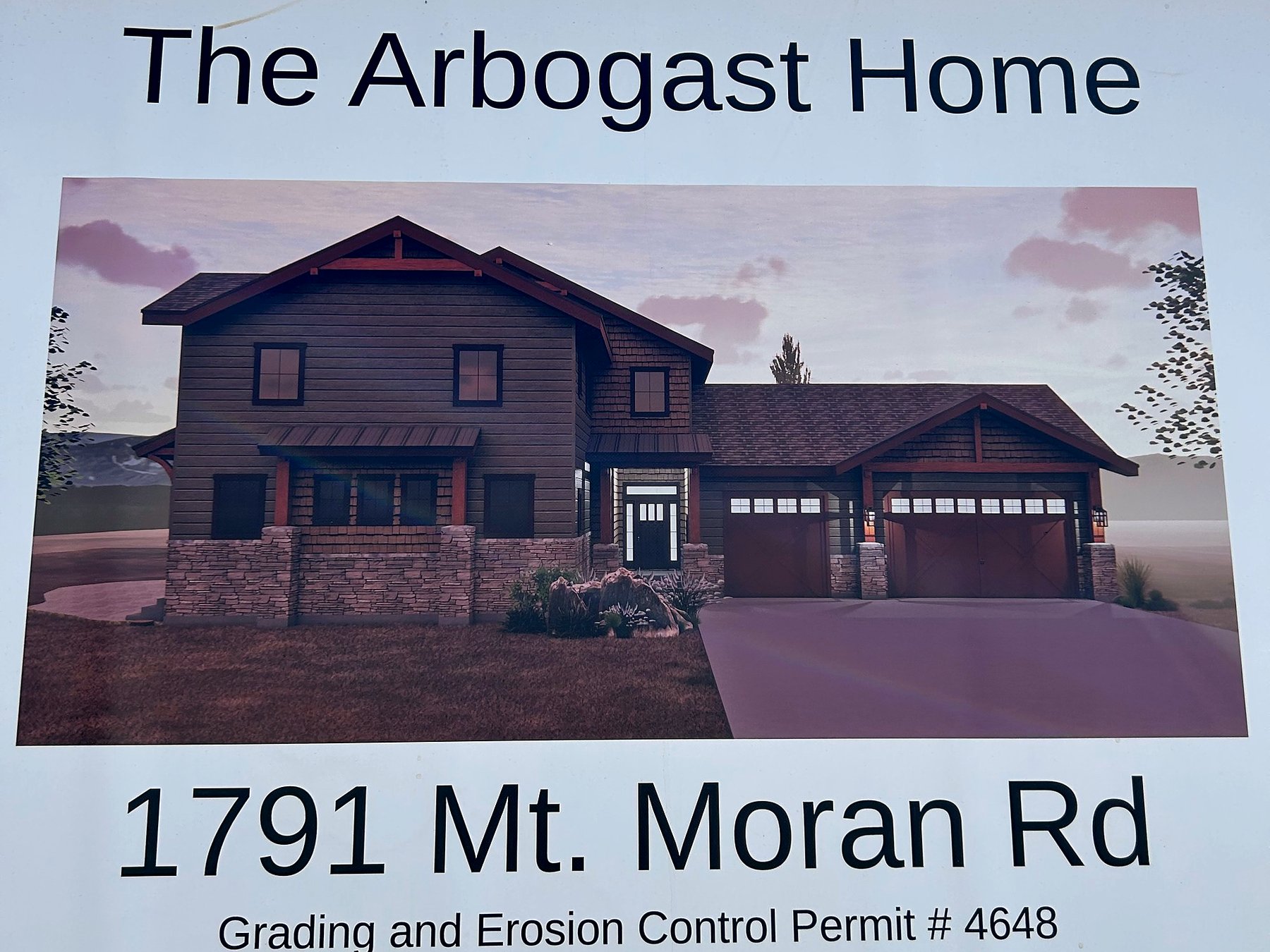
  • The Arbogast Home architectural rendering at 1791 Mt. Moran Rd, showcasing luxury custom home design with a stone and wood exterior, integrating with Teton County building standards.

    How to Build in Teton County: Permits, Septic, Snow Load, and the Timeline That Actually Works

    If you have never built in Teton County before, the most expensive surprise is not the per-square-foot number. It is the calendar. Out-of-state buyers come in expecting a build to break ground 60 days after they sign. In Teton County, that is almost never how it goes — and the builders who pretend otherwise are the ones whose jobs end in lawsuits.

    Here is what actually has to happen, in order, before a foundation gets poured in Driggs or Victor in 2026.

    Step 1 — Lot due diligence (4–8 weeks before you buy)

    Before you close on the lot, run a survey, check water rights and septic feasibility, confirm setbacks, and pull a wetlands review if there is any chance of riparian buffer. Lots in Teton Valley look simple. Many are not. I have seen buyers walk into water-rights issues, septic perc-test failures, and easement problems that added six figures to the build before any shovel hit dirt.

    Step 2 — Schematic design (8–12 weeks)

    Get an architect or design-build team on the schematic in parallel with site due diligence. This is where the build either gets right or starts going sideways. Do not skip the energy compliance review at this stage — Idaho residential energy code adds real cost if you design for it after the fact.

    Step 3 — Construction documents + engineering (8–12 weeks)

    Stamped structural drawings (snow load minimum 70 psf in most of Teton County, higher in some zones), MEP design, geotech if your lot needs it, civil for driveways and grading. Budget 8–12 weeks. Push it and your build dates push too.

    Step 4 — Permits (4–8 weeks)

    Teton County and the City of Driggs both have plan-review queues. In 2026 you should plan on 4–6 weeks for a complete plan submittal to come back approved, sometimes longer if reviewers kick comments back. Both jurisdictions have residential impact fees on top of permit fees.

    Step 5 — Site prep + foundation (4–8 weeks)

    Excavation, septic install if applicable, well drilling, footings, foundation, backfill. Weather-dependent. In Teton Valley you do not pour foundations between roughly mid-November and mid-March without significant added cost — frost protection, blankets, heated water. Smart buyers plan for a spring or summer foundation.

    Step 6 — Vertical build (10–16 months)

    Framing, dried-in shell, mechanical rough, drywall, interior finish, exterior, landscape. On a 4,000–5,500 sf custom home in Teton Valley with luxury finishes, plan 12–14 months from foundation to final walk in 2026. Anyone telling you 8 months is selling you a spec home.

    Realistic total timeline

    From the day you decide to build to the day you walk into your finished home: 18–24 months is honest. Faster is possible if your plans are already in hand or you are remodeling. Slower is common if the lot has issues, the architect runs over, or the build hits a weather window wrong.

    How SwagerBuilds runs the timeline

    Every project starts with 30-day plan-or-walk feasibility. We map the timeline for your specific lot, specific design, and specific budget. If the calendar does not work for what you want, we tell you up front — not 14 months in.

  • Construction of a luxury custom home in Teton Valley, showcasing framed structure with OSB sheathing, surrounded by a dirt lot and blue sky.

    What It Actually Costs to Build a Luxury Custom Home in Teton Valley in 2026

    I get a call about every other week from someone who’s been quoted a per-square-foot number by a builder and now they’re confused. The number is too low to be real. Or it’s too high to make sense. Or — most often — it’s a number with no scope attached, which means it’s not really a number at all.

    Here’s what custom luxury homes actually cost to build in Teton Valley in 2026, what drives the spread, and what the per-square-foot quote you got from another builder probably left out.

    The honest range

    A $1M–$5M custom home in Teton Valley in 2026 lands somewhere between $550 and $1,200 per square foot finished. Below $550 you’re either looking at a production builder (Adair, spec-style) or a builder cutting things they shouldn’t. Above $1,200 you’re in the Jackson-Hole-finishes range — wide-plank European white oak, custom steel windows, full smart-home wiring, $200K kitchens. Both are real.

    Most of my custom home jobs in Driggs and Victor land between $700 and $950 per square foot finished, on a 3,500–5,500 sf footprint. That puts you at $2.5M–$5M for the home itself.

    What that doesn’t include

    The per-square-foot number you’ve been quoted almost certainly doesn’t include some or all of these:

    • Site work — clearing, excavation, septic, well, snow-melt approach driveway. Easy $80K–$250K depending on the lot.
    • Permits and impact fees — Teton County and the City of Driggs both have residential impact fees on top of permit fees. Plan $15K–$30K.
    • Engineering — structural stamps, energy compliance, geotech. $10K–$25K.
    • Architect — typically 8–12% of construction cost. $200K–$500K on a $2.5M–$5M home if you go full design-build with a name firm.
    • Landscape — anything beyond rough grade. $30K–$200K+.
    • Furniture, art, and FF&E — clients often forget this is its own line. $100K–$500K on a luxury home.
    • Sales tax and contingency — Idaho sales tax on materials, plus a 5–10% contingency we recommend on every build.

    When you add it all up honestly, a buyer planning a 4,500 sf custom home in Driggs should budget $3.5M–$5.5M total to be in the door, depending on finishes.

    Where the budget actually goes

    Rough split on a typical $3.5M custom home in Teton Valley:

    • Site work + foundation: 8–12%
    • Framing + structural: 15–20%
    • Mechanical / electrical / plumbing: 12–15%
    • Insulation + drywall + interior framing: 6–9%
    • Windows + exterior: 10–14% (huge swing — Jackson finishes vs. high-quality standard)
    • Cabinetry + millwork: 8–12%
    • Tile + stone + countertops: 6–10%
    • Flooring: 4–6%
    • Lighting + fixtures: 3–5%
    • Landscape: 4–8%
    • GC fee + overhead: 12–18%

    The three things that move the price most

    1. Window package. Andersen 100-series vs. Marvin Ultimate vs. custom European steel — that single line item can move the build $150K–$500K.
    2. Cabinetry and millwork. Stock cabinets vs. semi-custom vs. shop-built locally vs. flown-in custom panels — same swing.
    3. Site complexity. A walk-out basement on a sloped lot in a high-snow zone with a 200-foot driveway costs more than a flat lot in town. Sometimes a lot more.

    How to get a real number

    Don’t trust any per-square-foot number that doesn’t come with a scope. The right way to price a luxury custom home is to do real feasibility — actual site review, real plans (or schematic intent), real allowances, and a real timeline. That’s why every SwagerBuilds project starts with a 30-day plan-or-walk window. We design, scope, and price the build before you commit. If the budget can’t carry the vision, you walk — no fees.

    If you want a real number on your project, book a 30-minute Planning Call. The first call ends in a yes-or-no on the project — no follow-up loops, no pressure.