
Contents
- What is the Huber ZIP System?
- How is ZIP different from OSB + house wrap?
- The R-Sheathing variant — when is it worth the upgrade?
- Pros: where ZIP earns its premium
- Cons: where ZIP gets a bad reputation
- How much does ZIP System cost in 2026?
- When we’d spec ZIP, and when we wouldn’t
- FAQ
- Want a real conversation about your build?
TL;DR: ZIP System is OSB sheathing with an integrated water-resistive barrier and a tape system for the seams. Done right, it’s fast and tight. Done wrong, the tape peels and water gets in. Worth specifying on custom homes where the labor savings and air-tightness pay off — not the default on every build.
What is the Huber ZIP System?
Huber ZIP System is OSB structural sheathing with a resin-impregnated water-resistive barrier bonded to the panel face at the factory. You hang the panels like normal OSB, tape every seam with Huber’s acrylic ZIP tape, and the wall is sheathed, water-resistant, and air-sealed in one pass. There’s a 180-day exposure guarantee and a 30-year limited warranty on the assembly.
The product line covers wall panels, roof panels, long-length sheathing for taller walls, and the R-Sheathing variant with continuous exterior foam bonded to the back of the panel.
How is ZIP different from OSB + house wrap?
Standard construction is OSB sheathing nailed to the studs, then a sheet house wrap stapled over the OSB. ZIP collapses those two layers into one. You skip the house wrap step entirely. When the tape and the panels are installed correctly, the green WRB face plus the tape form a continuous water-resistive barrier and a continuous air barrier in one product.
The R-Sheathing variant — when is it worth the upgrade?
ZIP System R-Sheathing adds a layer of continuous foam insulation bonded to the back of the panel. Standard thicknesses run from R-3 to R-12. It’s a way to add exterior continuous insulation without specifying a separate rigid foam layer. The math gets interesting in cold climates where IECC requires continuous exterior insulation. Instead of running a separate layer of polyiso over standard ZIP, R-Sheathing puts the foam where it needs to be in one product. It’s not the right call on every build. If you’re building to baseline code in a mixed climate, the standard panel plus a careful air-seal often pencils better.
Pros: where ZIP earns its premium
- Faster dry-in. Sheathing and WRB in one pass. Crews report 25–30% lower labor on the exterior envelope when they’re set up for it.
- Better air-tightness. Custom builders chasing low-ACH numbers consistently report tighter blower-door results with ZIP than with stapled house wrap.
- Cleaner window flashing. The ZIP Stretch flashing tape and ZIP Liquid Flash give you a tested integration with the WRB face.
- 180-day exposure guarantee. Useful when siding gets delayed.
- One-call warranty. Huber backs the assembly.
Cons: where ZIP gets a bad reputation
- The tape can peel. The number-one ZIP complaint. The acrylic adhesive is pressure-sensitive — it doesn’t activate until it’s rolled. Crews that don’t roll the tape immediately get peeling. This is an install problem more than a product problem, but it’s the install problem.
- Cut edges can swell. Exposed OSB at panel cuts can swell if wet. Mitigated by ZIP tape or ZIP Liquid Flash.
- Tape installation is more skilled than it looks. Tape needs to be centered within 1/2″ of the seam, applied to a dust-free surface, and rolled. Cold weather requires the cold-weather formulation.
- Cost premium. Roughly $1.50–$2.50 per sq ft installed vs. $0.25–$0.75 for Tyvek + OSB.
- Warranty is conditional. The 30-year warranty is voided by dirty tape, cold application, wrinkled tape, and non-code installations.
How much does ZIP System cost in 2026?
For a 7/16″ 4×8 wall panel, builder-direct pricing in eastern Idaho is running roughly $20–$28 per sheet depending on volume. Compare with $14–$18 for standard 7/16″ OSB. The ZIP tape adds about $0.18–$0.25 per linear foot of seam. ZIP Liquid Flash is roughly $40–$55 per 20-oz tube.
On a 2,400 sq ft single-story home with about 3,000 sq ft of wall area, the material premium for ZIP over OSB+Tyvek is typically $4,000–$6,000. Labor savings claw back $1,500–$3,000 of that. Net premium: $2,500–$4,500 per home.
When we’d spec ZIP, and when we wouldn’t
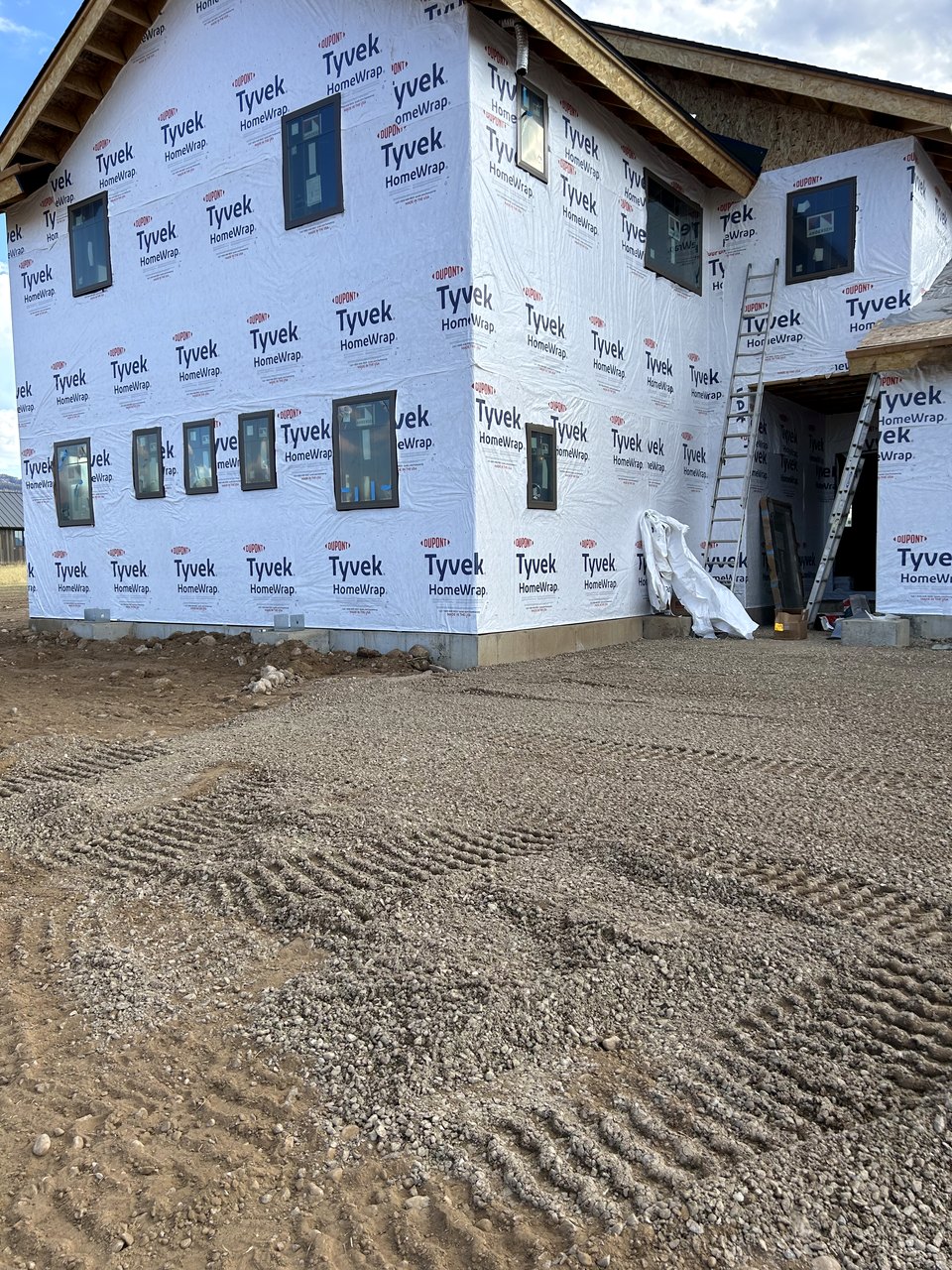
We’d spec ZIP on a custom build where the homeowner cares about energy performance, the crew has installed it before, and the schedule wants a faster dry-in. The math works on most of our Teton Valley new builds. On a remodel where we’re tying into existing OSB sheathing, or on a tight-budget production-style home, Tyvek HomeWrap over standard OSB with careful flashing is the better answer.
The honest builder take: ZIP is a great product when it’s installed well. The premium goes to waste when the crew doesn’t roll the tape, leaves cut edges exposed, or stretches the cold-temperature application limits. If you’re picking ZIP, also pick a crew that’s done it.
FAQ
Is the Huber ZIP System worth the extra cost?
On most custom homes, yes — when the crew is trained on it. The labor savings on the exterior envelope are real, and the air-tightness improvement shows up on blower-door tests. On budget builds and remodels, the math gets thinner.
Does ZIP System tape really fail?
Tape failures happen — almost always because the tape wasn’t rolled, wasn’t centered, or was applied to a dirty or cold surface. The acrylic adhesive only activates when rolled.
Can ZIP System get wet before siding goes on?
Yes — Huber’s 180-day exposure guarantee covers the panel and taped seams against UV and weather for six months. Cut edges should be sealed with ZIP tape or ZIP Liquid Flash.
What’s the perm rating of ZIP sheathing?
The green WRB face measures roughly 12–16 perms (ASTM E96 wet cup) — high permeability, good for cold climates where the wall needs to dry outward.
Do I need a separate house wrap with ZIP System?
No. When ZIP is installed and taped per the manufacturer instructions, it is the code-required WRB and an effective air barrier.
What is ZIP Stretch tape and when do I use it?
ZIP Stretch is a flexible flashing tape for window and door rough openings. It stretches into corners without cuts. Use it on every window head and sill — it’s cheap insurance.
What’s the warranty on the ZIP System?
30-year limited warranty on the assembly plus a 180-day exposure guarantee. Voided by improper tape installation and non-code installations.
Want a real conversation about your build?
If you’re trying to decide between ZIP and stapled house wrap for a custom home in Teton Valley or Madison County, we’re happy to walk through it on the phone. Contact SwagerBuilds.
Related: pillar guide, ZIP vs Tyvek, LP WeatherLogic vs ZIP, cost in 2026.
Leave a Reply