
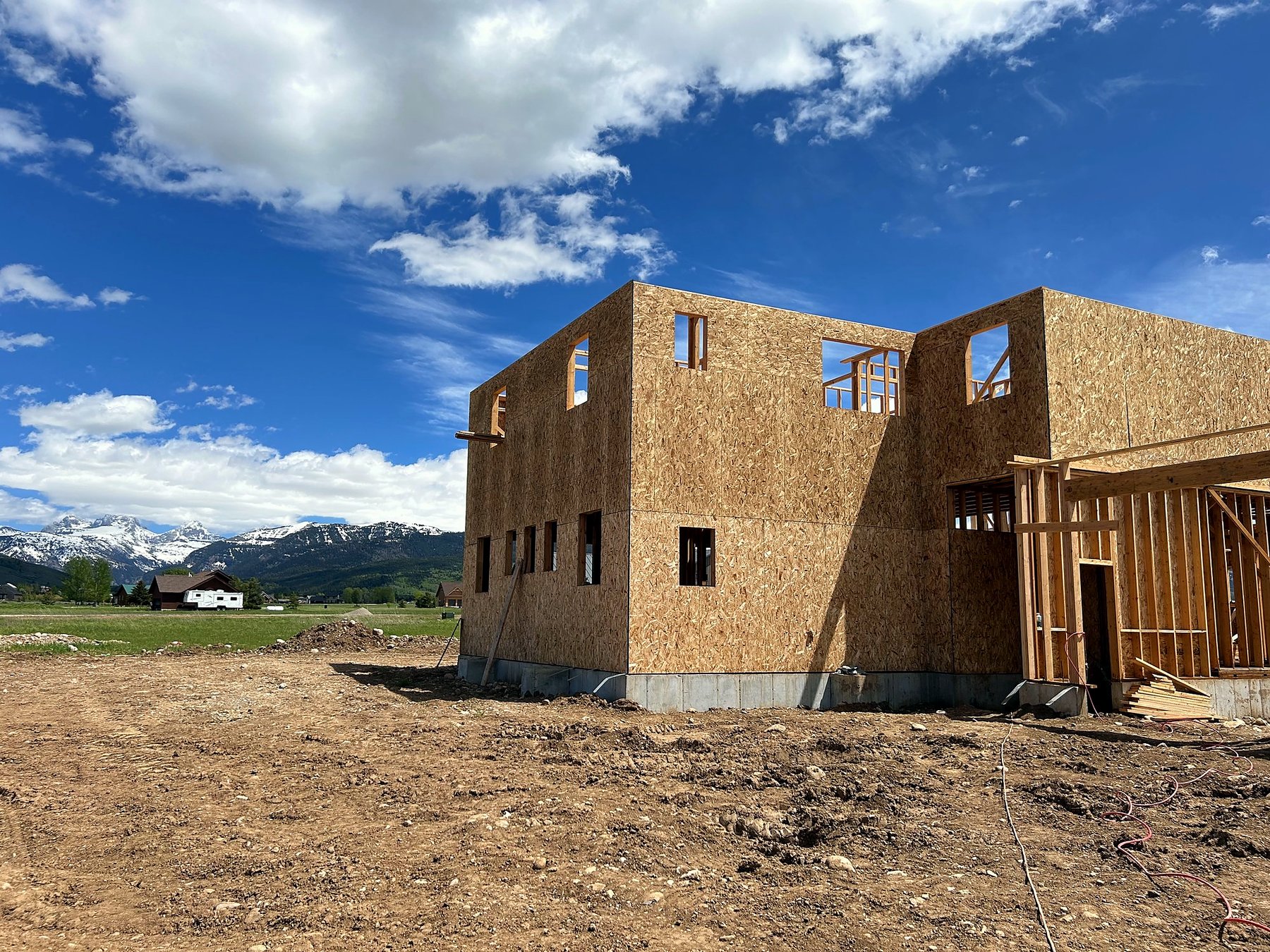
Every Bay Area family I work with asks the same question in the first 20 minutes: Driggs or Victor? Both are in Teton Valley, both look beautiful in the listing photos, both are about an hour from the Jackson Hole airport. From a Marin or Palo Alto distance they look interchangeable. They’re not.
I’m Bryce Swager. I run SwagerBuilds out of Rigby, and I’ve built and planned homes in both towns. Here’s the honest comparison for a California second-home buyer.
The 30-second version
- Driggs — bigger town, more restaurants, the regional airport, the rodeo grounds, the hospital, more art and food scene. Closer to Grand Targhee. Slightly more expensive lots in many subdivisions. The “small mountain town that has its act together” feel.
- Victor — smaller, quieter, closer to the pass over to Jackson by about 15 minutes. Slightly cheaper lots on average. More agricultural feel at the edges. The “country quiet but I can be in Jackson for dinner” feel.
Both are great for a Bay Area or Orange County family second home. The right answer depends on what you actually want the second home to feel like.
Lot prices and inventory in 2025
Buildable lots in Teton Valley aren’t cheap anymore. The 2018–2021 land run reset price expectations. Here’s the realistic 2025 range:
| Town | Typical lot range | View premium | Acreage |
|---|---|---|---|
| Driggs (in town + close subdivisions) | $200K–$500K | View lots in established subdivisions $400K–$800K+ | Most lots 0.25–1 acre; ag-zoned 5+ acre lots run $600K–$1.5M+ |
| Driggs (ag / view lots outside town) | $400K–$1.2M | Direct Teton view premium 30–60% | 5–20+ acre parcels common |
| Victor (in town + close subdivisions) | $150K–$400K | View premium smaller — Tetons partially obscured from some Victor angles | Most lots 0.25–1 acre |
| Victor (south/west toward Mike Harris, Pine Creek Pass) | $250K–$900K | View lots higher up the bench can match Driggs view premium | 1–10+ acre lots more common |
The biggest practical difference: Driggs has more subdivisions with HOA design review and established CC&Rs. Victor has more parcels where you have more design flexibility but also more variable neighbor situations. Both have pros and cons.
What it feels like to live there (8–14 weeks a year)
Driggs feels like: A real downtown with the Spud Drive-In, the Royal Wolf, Forage Bistro, Citizen 33 brewery. The Teton County Fair and Driggs Rodeo every summer. The Driggs Reed Memorial Airport — small but real, useful for private flights. Grand Targhee within 15 miles. A growing arts scene; the Driggs Digs farmers market. More working families and second-home families mixed together.
Victor feels like: A smaller, looser main street — Victor Emporium, Wildlife Brewing, the Knotty Pine. Quieter at night. A 25-minute drive to Jackson over Teton Pass (when the pass is open and dry). More direct access to Mike Harris and the south end of the valley. Slightly more agriculture, ranching, and barn architecture in the surrounding land. Bay Area families I work with who picked Victor tend to be the ones who specifically didn’t want the bigger-town energy.
Most California families I work with end up choosing Driggs for the amenities and the airport convenience, and Victor for the quieter rural-feeling parcels and slightly easier Jackson access. Both are correct answers to different questions.
Access to Jackson Hole — the real numbers
Both towns sit on the Idaho side of the Tetons. Jackson is over Teton Pass (Highway 22) — about a 35-minute drive from Driggs in summer, 45+ in winter or weather. From Victor, it’s about 20 minutes in summer, 30+ in winter. Teton Pass closes periodically in winter for avalanche control. When it closes, the alternate is a 2-hour route through Swan Valley and Hoback Junction. Plan trips around it.
If “I want to be in Jackson for dinner without thinking about it” matters to you, Victor is meaningfully easier. If you’re going to ski Grand Targhee instead of Jackson Hole Mountain Resort on most days, Driggs is closer.
HOA dynamics and design review
Most Driggs subdivisions have meaningful design review. Roof pitch, exterior materials, color palettes, and sometimes square footage minimums are written into CC&Rs. This protects property values but constrains design. Read the CC&Rs before you fall in love with a floor plan.
Victor has design review in many newer subdivisions too, but on the whole the rural and ag-edged parcels carry fewer covenants. If your California architect has a strong design opinion that includes a flat or low-pitched roof, large expanses of glass, or modern materials, Victor sometimes gives you more room.
- If you want predictable neighborhood aesthetics and resale protection, Driggs subdivision lots are usually the safer bet.
- If you want design freedom and rural privacy, Victor’s bench and outskirts parcels often give you more.
Build cost differences
Construction cost differences between Driggs and Victor are smaller than buyers expect. Both pull from the same Teton Valley trade pool and the same lumber and steel suppliers. Snow load engineering is essentially the same. Build cost per square foot is within roughly 5% between the two towns for the same finish package.
- Driveway / site work — Victor’s bench lots often have longer driveways and more site prep, which can add $30K–$120K vs. a flat in-town Driggs lot.
- Septic — Victor has more variable soils; some lots have tougher septic engineering.
- Snow load — Some Driggs north-side and Tetonia lots carry higher site-specific snow load than typical Victor lots. Always pull the site-specific number for your lot.
So the build-cost question rarely decides Driggs vs. Victor. The land cost, vibe, and access questions decide it.
Restaurants, ski scene, and weekend life
Driggs evening: Citizen 33 for beer, Forage for a sit-down dinner, the Spud Drive-In on a summer movie night, Tatanka Tavern for a casual burger. Victor evening: Knotty Pine for live music, Wildlife Brewing for pizza and beer, drive over the pass for Jackson dinners if you want bigger.
Skiing: Grand Targhee — closer to Driggs (15 miles). Smaller, quieter, world-class snow on the right days. Jackson Hole Mountain Resort — over the pass. Bigger, busier, more terrain. Closer to Victor by ~15 minutes. Most of my California clients ski both. The split decides where they buy a season pass, not where they buy a lot.
Summer: Teton River for floating and fly-fishing — both towns access it easily. Grand Teton National Park is a 45–60 minute drive from either town. Mountain biking — Grand Targhee in summer, Mike Harris and the Big Hole range for trails.
If you’re building from California: plan two scouting trips — one in winter, one in summer — before committing to a town. The vibe difference between February-Driggs and July-Driggs (or Victor) is significant. You want to know you like both.
How Bay Area families I work with actually decide
- Marin / Mill Valley / Tiburon families tend to pick Driggs — they want a town with restaurants and an art scene, and a real downtown to walk in.
- Newport Beach / Laguna families split — those wanting bigger-house, longer-driveway, more-acreage builds tend to go Victor; those wanting in-town walkability go Driggs.
- Palo Alto / Atherton families building larger trophy programs tend to land on Driggs ag lots outside of town — best of both, but the most expensive land tier.
- Families specifically focused on ski-trip-with-kids logistics lean Victor for Jackson Hole proximity over the pass.
None of these are rules. They’re patterns.
Decision shortlist
- Visit both for a full weekend each, in different seasons. Eat dinner in town. Drive the pass. Walk a couple of lots.
- Define your weekly rhythm. Will you ski Targhee or Jackson? Will you walk to dinner or drive? Will you have guests in town often?
- Set a lot budget. Land alone in Driggs subdivisions runs $200K–$800K+, in Victor $150K–$600K+. Bigger ag parcels in either town add another tier.
- Read CC&Rs before submitting an offer. Design freedom is meaningfully different lot to lot.
- Walk every serious lot with a local builder before closing. Costs you a flight; saves you six figures of surprises.
For the bigger framing of the Teton Valley build — cost, timeline, permits, snow — see Building a Second Home in Teton Valley as a California Homeowner. For the trust stack that makes a remote build work, see How California Homeowners Manage a Custom Home Build From 800 Miles Away.
FAQ
Is Driggs or Victor cheaper for a second home?
Lot prices in Victor average lower than Driggs, often by 15–30%. Build cost per square foot is roughly the same in both towns — within 5%. The all-in cost difference for a comparable home is mostly driven by the land, not the build.
Which is better for Bay Area families — Driggs or Victor?
Both work. Driggs tends to win for families wanting a walkable downtown, restaurants, and proximity to Grand Targhee. Victor tends to win for families wanting quieter rural feel, larger parcels, and closer access to Jackson Hole over the pass.
How long is the drive from Driggs or Victor to Jackson Hole?
From Victor, about 20 minutes in summer, 30+ in winter, over Teton Pass. From Driggs, about 35 minutes in summer, 45+ in winter. The pass closes periodically in winter for avalanche control — the alternate route is roughly two hours through Swan Valley.
Are there HOA restrictions in Driggs and Victor?
Yes, in many subdivisions. Driggs subdivisions tend to have more formal design review and stricter CC&Rs. Victor’s rural and bench parcels often have fewer covenants but more variable neighbor situations. Read the CC&Rs on every lot before making an offer.
Where do Bay Area families build the most in Teton Valley?
Across both towns, but the most common pattern in 2025 is Driggs subdivision lots for in-town walkability or Driggs ag lots for larger view properties. Victor has been gaining share for design-flexible buyers and families prioritizing Jackson access.
Author: Bryce Swager — owner-builder at SwagerBuilds. Building in Driggs and Victor for California families since 2019.
Ready to compare specific lots? Book a 30-min planning call →
Leave a Reply