SwagerBuilds LLC · 4510 E 168 N, Rigby, ID 83442 · (208) 520-0636

Category: Barndo & Specialty

Barndominiums, shouses, ADUs, and specialty builds in Teton Valley and Eastern Idaho.

  • Barndominium Cost Per Square Foot in Idaho (2026): A Builder’s Real Numbers

    Barndominium Cost Per Square Foot in Idaho (2026): A Builder’s Real Numbers

    Barndominium cost in Idaho ranges from $185-$425 per square foot in 2026, depending on finish level, location, snow load, and whether you’re buying a kit or commissioning a stamped-engineered build. A basic barndo shell with minimal finish runs $185-$235/sq ft in Eastern Idaho. A mid-finish barndo with quality interior runs $235-$325/sq ft. A high-finish luxury barndo (custom home in a barndo wrapper) runs $325-$425+/sq ft, especially in Teton Valley or mountain-snow-load zones. The cheap-barndo number you see online is a kit number, not a real build number — and a kit is rarely what an Idaho buyer actually wants.

    The honest answer on barndominium cost per square foot in Idaho

    A barndominium in Idaho costs $185-$425 per square foot in 2026 for the actual built cost, before land, septic, well, road access, or design fees.

    The reason most online barndominium cost articles are misleading: they quote either the kit cost (the steel shell delivered on a truck) or the “starter” cost (shell + concrete + minimum-spec interior). Neither is what a custom buyer in Idaho is actually pricing.

    Here’s the honest breakdown by finish tier, for a barndominium built in Eastern Idaho (Rigby, Idaho Falls, Rexburg, Bingham County) at standard snow load:

    TierCost per sq ft (2026)What you get
    Kit-style basic$135-$185/sq ftSteel shell, concrete, minimum interior. Not what most buyers actually want.
    Standard finish$185-$235/sq ftInsulated, drywalled, finished kitchen and baths, residential-grade systems, mid-grade finishes.
    Mid-range finish$235-$325/sq ftHigher-grade cabinets, flooring, fixtures. Custom millwork. Better HVAC, better insulation, structurally engineered.
    High-finish / luxury$325-$425+/sq ftCustom millwork, stone or wood accents, high-spec windows, ICF or advanced wall assemblies. A real custom home with barndo aesthetics.

    For Teton Valley, mountain Boise County (Crouch, Garden Valley), or Jackson-adjacent builds, add 20-40% to each tier for snow load, sub-trade pricing, and winter logistics.

    What drives the per-square-foot number on an Idaho barndominium

    1. Snow load. A Rigby or Idaho Falls barndo at 30 psf ground snow load needs lighter structural steel than a Teton Valley or Crouch barndo at 60-80 psf. The structural package alone can add $15-$30/sq ft for high snow load zones.

    2. Finish level on the residential portion. A barndo with a 1,500 sq ft residence wrapped in a 3,500 sq ft shop is priced by zone — the shop side might be $80-$100/sq ft, the residence side $250-$400/sq ft. Don’t average them in your head.

    3. Site work and infrastructure. Well, septic, road, power drop, and pad work can add $40,000-$150,000+ to the total project cost depending on parcel. This is not “per square foot” cost — it’s a separate line.

    4. Engineering and stamped drawings. A stamped-engineered barndo is meaningfully more expensive than a kit, and meaningfully more durable. SwagerBuilds builds with stamped structural drawings on every project.

    5. Insulation and air-sealing. A barndo that’s insulated and air-sealed to perform like a custom home costs more up front and runs cheaper for the next 30 years. The cheap-insulation barndo is the most expensive long-term decision you can make in Idaho’s climate.

    Kit vs. stamped-engineered barndominium build

    The biggest single decision driving cost: are you buying a kit or commissioning a stamped-engineered build?

    A kit barndominium is a steel shell shipped on a truck. You (or your general contractor) erect it, pour the slab, and build out the interior to whatever spec you want. Kits look cheap on paper because they are — they’re just the shell. The actual built cost lands on top of the kit price, and the kit’s structural design is generic, not specific to your lot’s snow load, wind exposure, or seismic zone.

    A stamped-engineered build starts from drawings designed for your lot. The structural package is sized to your specific snow load and wind exposure. The wall assembly is designed for Idaho’s climate. The mechanical, electrical, and plumbing systems are designed integrated, not retrofitted into a shell that wasn’t planned for them.

    A kit barndo can work if you’re building a working barn with a small living quarter. For a primary residence or a serious shouse, a stamped-engineered build is almost always the better long-term decision.

    Where you build in Idaho changes the cost

    Same finish level, different location:

    LocationCost multiplier vs. Eastern Idaho baseline
    Rigby, Idaho Falls, Rexburg1.0× (baseline)
    Bingham County (Blackfoot, Shelley)0.95-1.0×
    Pocatello1.0-1.05×
    Crouch / Garden Valley (Boise County mountain)1.20-1.30×
    Driggs / Victor / Tetonia (Teton Valley)1.25-1.40×
    Jackson Hole, Wyoming1.50-1.80×

    Use the baseline cost per square foot, then apply the multiplier.

    How SwagerBuilds builds barndominiums

    SwagerBuilds builds barndominiums and shouses across Eastern Idaho and Teton Valley with the same system used on every custom home:

    • Stamped structural drawings on every build. Snow load, wind, and seismic specified to the parcel.
    • Fixed-price contracts after design. No cost-plus surprises.
    • Daily JobTread photo logs. Morning photo updates from the jobsite.
    • 24/7 jobsite cameras. Pull up the build from anywhere.
    • Written change orders before work moves.
    • Direct phone access to Bryce. Owner-operator.

    See the location pages for context on barndo builds in specific markets: Rigby, Victor, Driggs, and Crouch.

    Frequently asked questions about barndominium cost in Idaho

    How much does a barndominium cost per square foot in Idaho in 2026?

    $185-$425 per square foot for a stamped-engineered build in Idaho in 2026, depending on finish tier and location. Eastern Idaho runs the baseline; Teton Valley and mountain Boise County run 20-40% above baseline.

    Is a barndominium cheaper than a custom home in Idaho?

    Sometimes — a basic-finish barndo is cheaper than a comparable custom home on the same lot. A high-finish luxury barndo lands at custom-home cost per square foot, because the residential portion gets built to the same standard as any other custom home.

    Do I need a permit for a barndominium in Idaho?

    Yes. Every Idaho county requires building permits and stamped structural drawings for a residential barndominium. Specific requirements vary by county — Jefferson, Bonneville, Madison, Teton (ID), and Boise County all have their own review processes.

    Can a barndominium be built year-round in Idaho?

    Yes, but productivity drops 30-40% in winter (December-March) in mountain zones (Teton Valley, Crouch). Eastern Idaho is more forgiving but still slower in deep cold. A capable builder sequences foundation and structural work for late summer and fall.

    Does SwagerBuilds build barndominiums in Rigby, Idaho Falls, and Teton Valley?

    Yes. Barndominiums and shouses are a specialty — large parcels in Jefferson and Bonneville County and the larger lots in Teton Valley make this region one of the best in the United States for the format. Built with stamped structural drawings, not from a kit.

    How long does a custom barndominium take to build in Idaho?

    A SwagerBuilds barndominium typically takes 9-14 months from contract to move-in for Eastern Idaho builds, 12-16 months for Teton Valley and mountain Boise County builds.

    Ready to talk about your barndominium build?

    Tell Bryce about your lot, your timeline, and your vision. He’ll personally read it and reply within one business day.

    Book a Planning Call →

    SwagerBuilds LLC · 4510 E 168 N, Rigby, ID 83442 · (208) 520-0636 · swagerbuilds@gmail.com

    Bryce Swager is a 4th-gen Rigby builder. His family has operated Swager Ford and Swager & Swager in Rigby for nearly a century. He builds custom homes, luxury remodels, and stamped-engineered barndominiums and shouses across Eastern Idaho, Teton Valley, and Jackson Hole.
  • Barndominium Builders in Teton Valley: What to Know Before You Build

    Barndominium Builders in Teton Valley: What to Know Before You Build

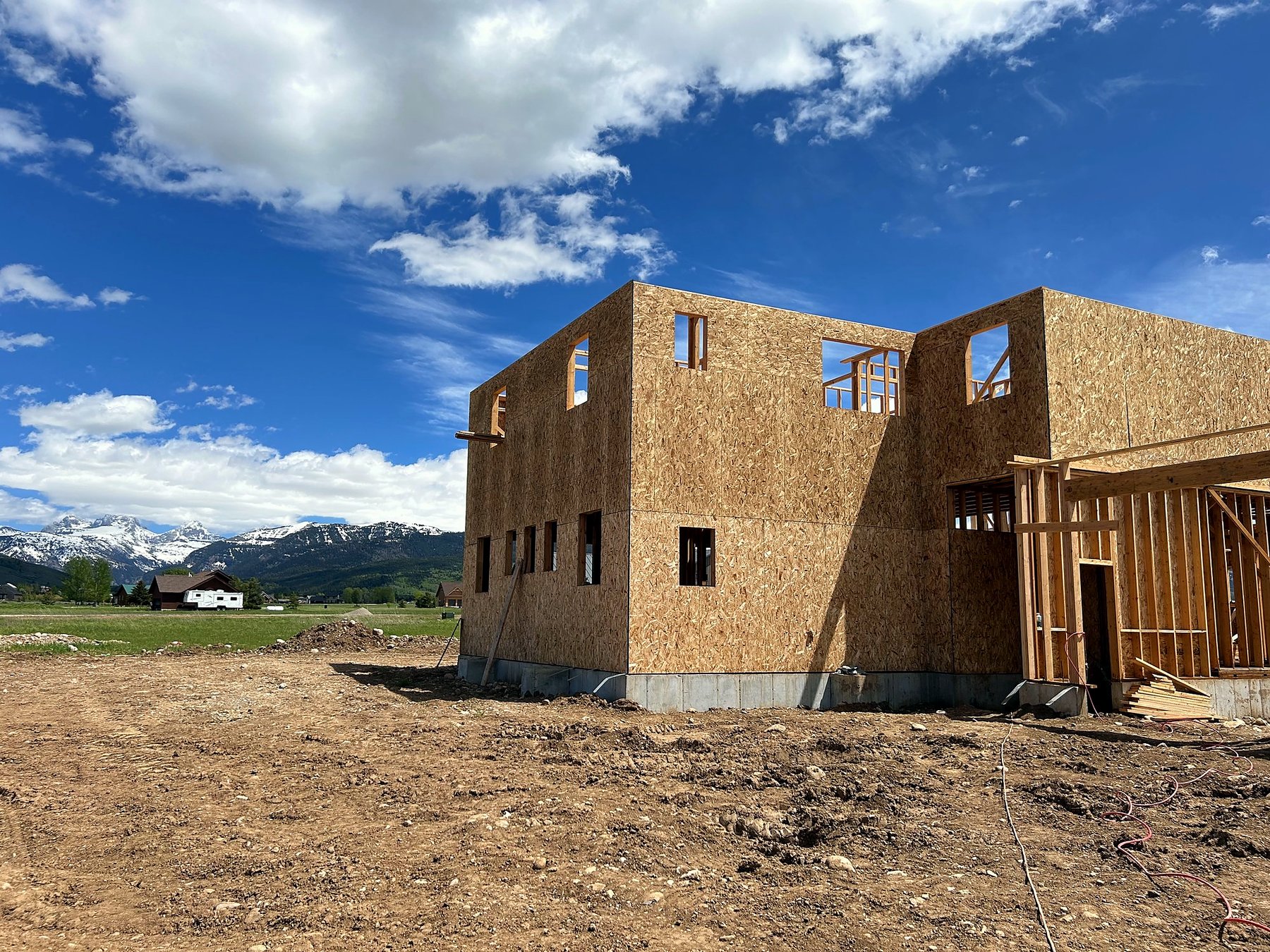
    Barndominium searches for Teton Valley jumped 280% over the last 18 months. Most of those searches end on the same handful of national barndo aggregator sites — companies based in Texas or Tennessee that have never poured a foundation in -25°F. They’ll quote you a Texas price, sell you a Texas kit, and leave you with a building that fails its third winter in Driggs.

    If you’re thinking about a barndominium in Teton Valley — Driggs, Victor, Tetonia, Felt, or Alta, Wyoming — this is the guide that tells you what’s actually different about building a barndo at 6,200 feet of elevation in mountain weather.

    I’m Bryce Swager, founder of SwagerBuilds. We build custom homes in Teton Valley and surrounding Eastern Idaho, including barndo-style and shouse builds. The advice below comes from real Teton Valley project experience — not a national playbook.

    Can you build a barndominium in Teton Valley?

    Yes — but Teton Valley barndominiums need significantly different engineering than barndos built in Texas or the Southeast. Snow loads, wind ratings, insulation requirements, and foundation depth in Teton County all push costs and complexity well above the national barndo average. Expect $250-$400 per square foot for a quality Teton Valley barndo build, vs. $150-$200 in flatland markets.

    Why Teton Valley Barndos Are Different (And More Expensive) Than Texas Barndos

    A barndominium is a metal-frame building (post-frame or steel-frame) with a residential interior. The appeal: faster build, larger open spans, and a tougher, more flexible structure for owners who want shop space, multi-use storage, or a working ranch layout.

    In Texas, a 2,500 sq ft barndominium might run $375K-$500K finished. The same square footage in Teton Valley runs $625K-$1M. Here’s the real reason why:

    • Snow load: Teton Valley requires roof structures rated for 80-100 PSF (pounds per square foot) ground snow load. Texas? 5-15 PSF. That’s 6-20x more steel and engineering on the roof structure alone.
    • Frost depth: Foundations in Teton County must extend 48 inches below grade minimum. Texas: 12-18 inches. Triple the concrete and excavation.
    • Insulation requirements: Idaho code requires R-49 in ceilings, R-21 in walls. Texas requires R-30 and R-13. Insulation cost roughly doubles.
    • Wind rating: Mountain valleys see 90+ mph wind events. Most national barndo kits are designed for 70-110 mph and need engineering upgrades for our climate.
    • Vapor management: -25°F outside meets 70°F inside, and water vapor wants to migrate through the wall and condense. Without a properly engineered wall assembly, your steel frame rusts from the inside out by year 7-10. We’ve seen it.

    The takeaway: a barndominium in Teton Valley is not a kit you order from a national supplier and stick on a slab. It’s a custom build that uses post-frame or steel-frame construction. The “barn” part is a structural choice, not a budget hack.

    What a Teton Valley Barndominium Actually Costs in 2026

    Here’s the real cost range, broken down by build type:

    Build TypeSq FtCost RangePer Sq Ft
    Basic post-frame barndo (livable but minimal finish)2,000-2,500$400K-$650K$200-$260
    Mid-tier barndo (residential-grade interior)2,500-3,500$700K-$1.1M$250-$340
    Luxury barndo (high-end finishes, mountain modern)3,500-5,000+$1.2M-$1.8M+$325-$425
    Shouse (shop + living quarters combined)3,500-6,000$850K-$1.5M$230-$310

    Important: these numbers exclude land, site work (well, septic, access), permits, and soft costs. Add 15-25% to your build number for those.

    How to Choose a Teton Valley Barndominium Builder

    There are four types of “barndominium builders” you’ll find when you search. Only two of them should be on your shortlist if you’re building in Teton Valley.

    • National barndo kit companies (avoid). They sell you a metal-frame package, ship it to your lot, and hand off construction to local “preferred contractors” who may or may not have ever built one. The kit isn’t engineered for our climate.
    • Out-of-state barndo specialists (avoid). Companies based in Texas, Tennessee, or Oklahoma who claim to “build nationwide.” The construction systems they use don’t translate.
    • Local custom builders with barndo experience (preferred). Teton Valley general contractors who’ve built post-frame or steel-frame structures in Idaho’s climate. They know the local engineering, the local subs, the snow load math, and the permit process.
    • Local shop builders who can do residential (situational). Idaho contractors who normally build agricultural shops and have started doing residential. Cheaper, but vet carefully.

    When you call a builder, ask these specific questions:

    • “Have you built a fully residential barndominium in Teton County?” (Not Texas. Not even Idaho Falls. Teton County specifically.)
    • “What snow load is your roof structure engineered for?” (Right answer: 80-100 PSF minimum.)
    • “What’s your wall assembly and how do you manage vapor?” (Right answer: a real explanation of the layer order, including where the vapor barrier sits.)
    • “Who’s your structural engineer of record on this project?” (You want a named, licensed Idaho engineer, not a kit-supplied stamp.)
    • “What does your warranty cover, and for how long?” (One year minimum. Real builders extend major systems further.)

    Common Teton Valley Barndominium Layouts That Actually Work

    Three layout patterns work especially well in Teton Valley because they handle snow, ski gear, and mountain-active families:

    • L-shaped barndo with attached shop. Living quarters in one wing, 30×40 or 40×60 shop in the other. Mudroom hub between them. Perfect for contractors, ranchers, and families with 2+ snowmobiles.
    • Loft-style barndo. Open great room with vaulted ceiling, primary suite on main floor, secondary bedrooms in a loft. Maximizes the open-frame architecture without sacrificing privacy.
    • Mountain modern barndo. Steel and timber hybrid, big west-facing glass for Teton views, exposed structural members as design features. Can hit luxury-level appraisals while keeping the shop-style efficiency.

    The wrong move in Teton Valley: trying to force a Texas-style flat single-story barndo onto a 6,200 ft elevation lot. The elevation, the snow, and the views all push toward a different design language.

    Permitting a Barndominium in Teton County

    Teton County classifies a barndominium as a single-family residence, not an agricultural building. That means full residential permitting:

    • Building permit through Teton County Building Department
    • Septic design and permit through the Eastern Idaho Public Health District
    • Well permit through the Idaho Department of Water Resources
    • Driveway permit if accessing a county road
    • Wildfire defensible space requirements if your lot is in the new wildfire overlay zone

    Plan 60-90 days for the full permit cycle in Teton County. Add 30-60 more days if your lot is on a private road or has access easements that need to be cleared up.

    FAQ — Barndominium Builders in Teton Valley

    Are barndominiums allowed in Teton County, Idaho?

    Yes. Teton County has no restrictions on barndominium-style residences. They’re permitted as single-family residences. Some private subdivisions (covenants, conditions, and restrictions) restrict barndo aesthetics — always check your CC&Rs before you commit to a barndo design.

    Can I get a mortgage on a barndominium in Teton Valley?

    Yes, but only with the right lender. National lenders often refuse barndo financing or quote high rates. Local Idaho lenders (Bank of Commerce, Idaho Central Credit Union, Beehive Federal) understand the product and will finance them at competitive rates if the build meets residential standards.

    Is a barndominium cheaper than a traditional custom home?

    In Teton Valley, sometimes — but the gap is smaller than national articles suggest. A basic barndo runs $200-$260/sq ft vs $350-$450/sq ft for a traditional custom home. A luxury barndo with mountain modern finishes runs $325-$425/sq ft, basically equivalent to a conventional luxury build.

    Can I add a barndominium to land where I already have a house?

    Sometimes — Teton County allows accessory dwelling units (ADUs) on certain zoning categories. The barndo would be the secondary structure. Setbacks, ADU square footage limits, and septic capacity all affect feasibility.

    How long does it take to build a barndominium in Teton Valley?

    12-15 months for a residential-quality barndo. Faster than a traditional custom home (14-18 months) but not dramatically. The framing phase is faster (steel goes up quick), but interior finishes still take the same time.


    Considering a barndominium in Teton Valley?

    We do a free 30-minute call where we look at your land, your barndo concept, and whether the math actually works for your goals. Most of the time it does. Sometimes it doesn’t, and we’ll tell you straight.

    Schedule a discovery call →

    Or DM “BARNDO” to @swagerbuilds on Instagram and we’ll send you our Teton Valley barndo budget worksheet.